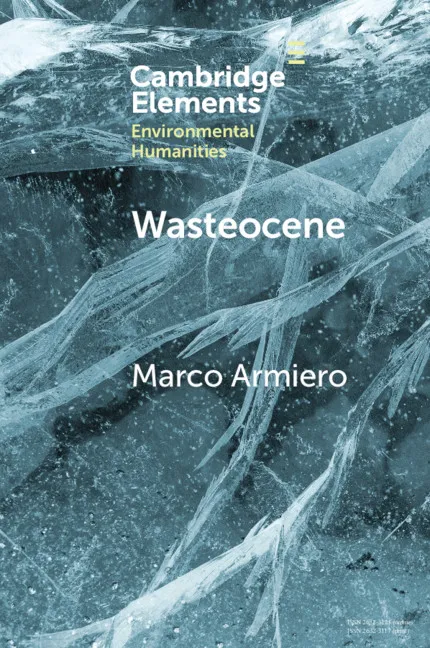
Wasteocene
Report an issue
Tell us what's wrong and we'll take a look.
Thanks – we got it. We'll review and follow up if needed.
Humans may live in the Anthropocene, but this does not affect all in the same way. How would the Anthropocene look if, instead of searching its traces in the geosphere, researchers would look for them in the organosphere, in the ecologies of humans in their entanglements with the environment? Looking at this embodied stratigraphy of power and toxicity, more than the Anthropocene, we will discover the Wasteocene. The imposition of wasting relationships on subaltern human and more-than-human communities implies the construction of toxic ecologies made of contaminating substances and narratives. While official accounts have systematically erased any trace of those wasting relationships, another kind of narrative has been written in flesh, blood, and cells. Traveling between Naples (Italy) and Agbogbloshie (Ghana), science fiction and epidemic outbreaks, this Element will take the readers into the bowels of the Wasteocene, but it will also indicate the commoning practices which are dismantling it.
Marco Armiero
Marco Armiero is ICREA Research Professor, Institut d'Història de la Ciència (IHC), Universitat Autonoma de Barcelona, Spain and president of the European Society of Environmental History. Formerly, he directed the Environmental Humanities Laboratory (EHL) at the KTH Royal Institute of Technology in Stockholm, Sweden. He has extensively published on environmental justice, climate change, migration, and nationalization of nature.
More by Marco Armiero


Why Readwise Books?
Readwise Books is an ebook & audiobook platform that automatically logs how much you and your friends read, making it fun and easy to read more. Learn more →