Report an issue
Tell us what's wrong and we'll take a look.
Thanks – we got it. We'll review and follow up if needed.
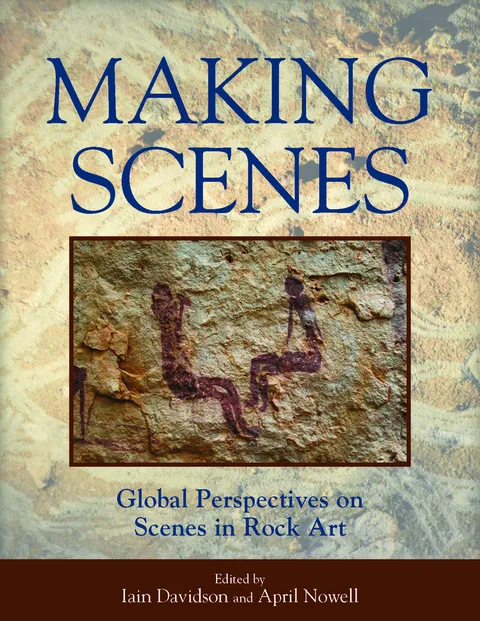
Dating back to at least 50,000 years ago, rock art is one of the oldest forms of human symbolic expression. Geographically, it spans all the continents on Earth. Scenes are common in some rock art, and recent work suggests that there are some hints of expression that looks like some of the conventions of western scenic art. In this unique volume examining the nature of scenes in rock art, researchers examine what defines a scene, what are the necessary elements of a scene, and what can the evolutionary history tell us about storytelling, sequential memory, and cognitive evolution among ancient and living cultures?
Iain Davidson
Iain Davidson was appointed at the University of New England in 1974 and was awarded a Personal Chair in 1997. He was appointed Emeritus in 2008 and took up the Visiting Chair of Australian Studies at Harvard University for 2008-9. Iain has worked on Spanish Upper Palaeolithic (including Palaeolithic Art), archaeology and ethnography of Northwest Queensland, Australian rock art, archaeology and heritage, colonization of Sahul, language origins, and cognitive evolution.
April Nowell
April Nowell is a Paleolithic archaeologist and Professor of Anthropology at the University of Victoria in British Columbia, Canada. She directs excavations of Lower and Middle Paleolithic sites in in the Middle East and studies cave art in Australia and France. She is known for her publications on cognitive archaeology, Paleolithic art, Neandertal lifeways, the archaeology of children and the relationship between science, pop culture, and the media. She is the co-editor of multiple volumes including Archaeology of Night: Life After Dark in the Ancient world and the author of the book Growing Up in the Ice Age, winner of the European Association of Archaeologists Book Prize (2023).


Why Readwise Books?
Readwise Books is an ebook & audiobook platform that automatically logs how much you and your friends read, making it fun and easy to read more. Learn more →