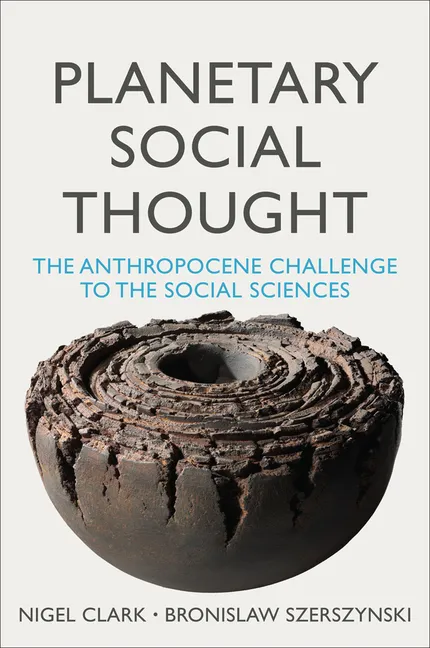
Planetary Social Thought
The Anthropocene Challenge to the Social Sciences
Report an issue
Tell us what's wrong and we'll take a look.
Thanks – we got it. We'll review and follow up if needed.
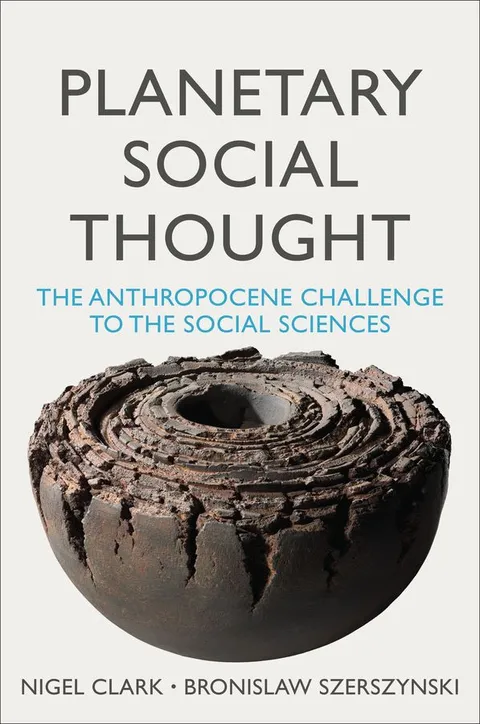
The Anthropocene has emerged as perhaps the scientific concept of the new millennium. Going further than earlier conceptions of the human-environment relationship, Anthropocene science proposes that human activity is tipping the whole Earth system into a new state, with unpredictable consequences. Social life has become a central ingredient in the dynamics of the planet itself.
How should the social sciences respond to the opportunities and challenges posed by this development? In this innovative book, Clark and Szerszynski argue that social thinkers need to revise their own presuppositions about the social: to understand it as the product of a dynamic planet, self-organizing over deep time. They outline 'planetary social thought' a transdisciplinary way of thinking social life with and through the Earth. Using a range of case studies, they show how familiar social processes can be radically recast when looked at through a planetary lens, revealing how the world-transforming powers of human social life have always depended on the forging of relations with the inhuman potentialities of our home planet.
Presenting a social theory of the planetary, this book will be essential reading for students and scholars interested in humanity's relation to the changing Earth.
Nigel Clark
Nigel Clark is Senior Lecturer in Human Geography at the Open University
More by Nigel Clark


Why Readwise Books?
Readwise Books is an ebook & audiobook platform that automatically logs how much you and your friends read, making it fun and easy to read more. Learn more →