The Great God Brown
Report an issue
Tell us what's wrong and we'll take a look.
Thanks – we got it. We'll review and follow up if needed.
"The Great God Brown" is a pioneering expressionist play by Nobel laureate Eugene O'Neill that explores the complexities of identity, success, and the internal conflict between one's true self and the public persona. The drama is renowned for its innovative use of masks, which characters wear to signify the divide between their private thoughts and social facades.
The story follows the intertwined lives of Dion Anthony, a sensitive and tortured artist, and William A. Brown, a successful but spiritually unfulfilled businessman. As they compete for the love of Margaret, their relationship evolves into a surreal exploration of envy, soul-sharing, and psychological disintegration. O'Neill's masterful use of symbolism and experimental staging techniques makes "The Great God Brown" a cornerstone of modern American theater.
This profound tragedy delves into the existential crisis of the individual, questioning the true cost of material achievement and the difficulty of authentic human connection in an increasingly fragmented world. It remains a powerful study of the dualities that define the human condition.
This work has been selected by scholars as being culturally important, and is part of the knowledge base of civilization as we know it. This work was reproduced from the original artifact, and remains as true to the original work as possible. Therefore, you may see the original copyright references, library stamps (as most of these works have been housed in our most important libraries around the world), and other notations in the work.
This work is in the public domain in the United States of America, and possibly other nations. Within the United States, you may freely copy and distribute this work, as no entity (individual or corporate) has a copyright on the body of the work.
As a reproduction of a historical artifact, this work may contain missing or blurred pages, poor pictures, errant marks, etc. Scholars believe, and we concur, that this work is important enough to be preserved, reproduced, and made generally available to the public. We appreciate your support of the preservation process, and thank you for being an important part of keeping this knowledge alive and relevant.
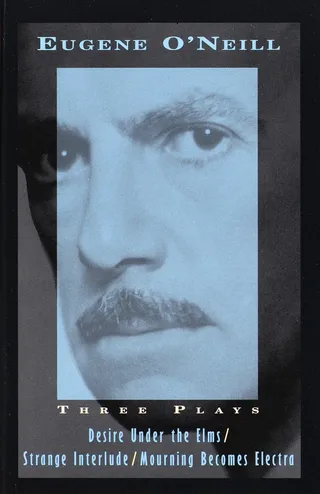
Eugene O'Neill
Eugene O'Neill was an American dramatist. His poetically themed plays were among the first in the United States to use realism drama techniques, which had previously been associated with Russian playwright Anton Chekhov, Norwegian playwright Henrik Ibsen, and Swedish playwright August Strindberg. The tragedy Long Day's Journey into Night, along with Tennessee Williams' A Streetcar Named Desire and Arthur Miller's Death of a Salesman, is frequently featured in lists of the best American plays of the twentieth century. He received the 1936 Nobel Prize in Literature. O'Neill is the only author to have won four Pulitzer Prizes for Drama. O'Neill's plays were among the first to feature talks in American English vernacular and characters from the margins of society. They try to retain their ambitions and objectives, but eventually succumb to disillusionment and despair. Only one of his few comedies has received widespread recognition. Almost all of his other plays contain some element of sorrow and personal pessimism. O'Neill was born on October 16, 1888, in the Barrett House hotel at Broadway and 43rd Street, in what was then Longacre Square (now Times Square), New York City. A commemorative plaque was first installed there in 1957. The location is presently filled by 1500 Broadway, which contains offices, retail, and the ABC Studios.
More by Eugene O'Neill






Why Readwise Books?
Readwise Books is an ebook & audiobook platform that automatically logs how much you and your friends read, making it fun and easy to read more. Learn more →