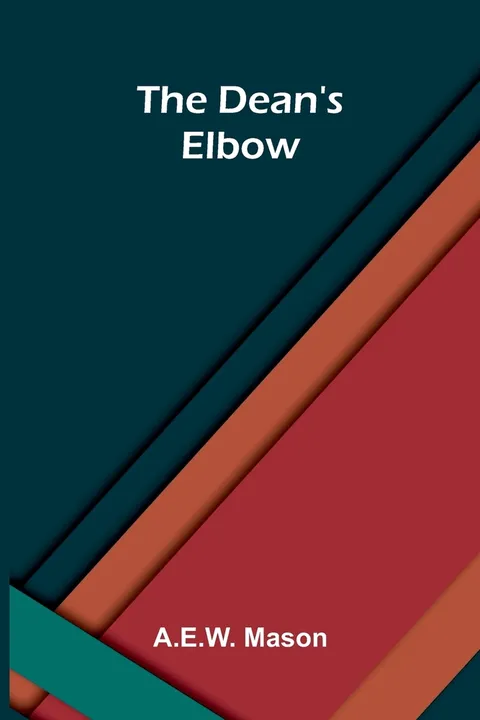
The Dean's Elbow
Report an issue
Tell us what's wrong and we'll take a look.
Thanks – we got it. We'll review and follow up if needed.
How much can ambition build before it begins to displace everything else? Mark Thewliss, a brilliant chemist and self-made industrialist, rises from an obscure scientific post to commercial power, Parliament and public prominence. His command of synthetic dyes, patents and mass production draws science into a world of rivalry and influence, while wartime chemistry raises the stakes of knowledge placed at the service of industry and government. Beyond the laboratories and political offices lies another measure of success: love, family obligation, companionship and the possibility of belonging. Mark's professional independence repeatedly presses against these domestic claims, creating a psychological and social conflict that cannot be settled by intellect alone. The novel moves between industrial centres, modest homes and the English south coast, tracing the divisions of class and power through both public achievement and private consequence. Sailing offers a striking countercurrent to Mark's ascent. Aboard his cutter in Poole Harbour, freedom, risk and solitude stand apart from the demands of business and politics, yet never entirely escape them. Blending literary fiction with industrial and historical concerns, the narrative brings chemistry, commerce, domestic life and seafaring into sustained tension, examining the price of advancement without reducing ambition to a simple virtue or fault. This book was out of print for decades and is now republished by Alpha Editions. It has been restored for today's and future generations. This edition is not just a reprint - it's a collector's item and a cultural treasure.
A E W Mason
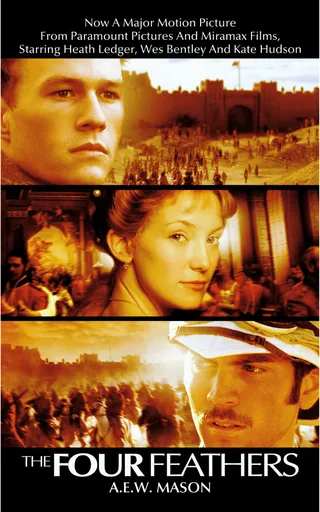
Alfred Edward Woodley Mason was an English author and Liberal Party Member of Parliament born in 1865 to Arthur James Mason and Mary Mason. He is best remembered for his novel about courage and cowardice in wartime, The Four Feathers. Mason attended Dulwich College and Trinity College, later writing plays and novels that often explored themes of heroism and personal conflict. His political career with the Liberal Party gave him insight into governance and societal issues, which influenced his storytelling. Andrew Lang was a Scottish poet, novelist, literary critic, and anthropologist born in 1844 to John Lang and Hannah Elizabeth Maclagan. Known especially for his collections of folk and fairy tales, he contributed extensively to children s literature and folklore studies. Lang was educated at the University of St Andrews and Balliol College and was married to Leonora Blanche Alleyne. His work bridged literature and anthropology, enriching the understanding of cultural narratives. Together, their combined literary talents and diverse experiences informed their collaborative writings, blending historical context, folklore, and rich characterization.
More by A E W Mason


Why Readwise Books?
Readwise Books is an ebook & audiobook platform that automatically logs how much you and your friends read, making it fun and easy to read more. Learn more →