Report an issue
Tell us what's wrong and we'll take a look.
Thanks – we got it. We'll review and follow up if needed.
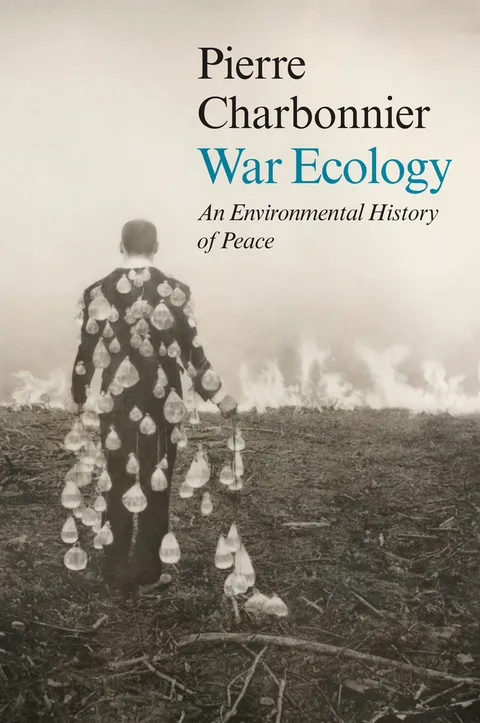
For nature and the climate, the only thing more dangerous than war is peace - this is the startling claim made by the French philosopher Pierre Charbonnier in his new book War Ecology. Charbonnier shows that we are the heirs of an intellectual and political history which maintained that creating the conditions for peace between human beings requires exploiting nature, exchanging resources and providing sufficient prosperity for all.
This idea, which can be traced back to the eighteenth century, found striking expression in the mid-twentieth century. In the aftermath of the Second World War, the development of fossil fuel infrastructures was combined with a pacifist and universalist discourse that sought to undermine the causes of war by liberating productivity. So peace, or the balance of great powers established by the United States, is largely a gift of fossil fuels, particularly oil. The fact that the climate crisis continues to gather pace today, with little effective intervention, is due not simply to a lack of political will: it also stems from the fact that the modern system of state legitimacy is rooted in the ability of each state to guarantee prosperity for its citizens, a guarantee backed up by a regime of cheap energy.
In the twenty-first century, argues Charbonnier, this paradigm has become obsolete, since we must both guarantee peace and security and respect planetary limits - in other words, learn to make peace without destroying the planet. It is in this context that the possibility of a war ecology is emerging, according to which sustainability and security no longer appear as contradictory injunctions but converge in the need to move towards a reduction in greenhouse gas emissions.
This highly original work will be of interest to a wide readership in social and political theory, philosophy, politics, environmental studies, war and peace studies and the social sciences and humanities generally, as well as anyone concerned about war, conflict and the climate crisis.
Andrew Brown
Translated by
After working worked for some of the country's leading architectural practices, Andrew Brown co-founded Brown & Brown in 2010. Numerous architectural awards include Scottish Design Awards Residential Award for Tidal House in 2024, and for Architecture Practice of the Year 2022, while Lower Tullochgrue was shortlisted for House of the Year for The Architects' Journal Manser Medal 2021. Andrew has taught at universities across the UK and is a member of the Royal Incorporation of Architects in Scotland and a Fellow of the Royal Society of the Arts. Originally from Glasgow, he lives in rural Aberdeenshire, the landscape of which, from the North Sea coast to the Cairngorms, is a driver in his work. Andrew's interests range from mid-century Scandinavian architecture and design to 20th-century Scottish literature. He draws further inspiration from product design, typography and as an aspiring photographer. Andrew is an alumnus of the University of Strathclyde and Chalmers University of Technology, Gothenburg.


Why Readwise Books?
Readwise Books is an ebook & audiobook platform that automatically logs how much you and your friends read, making it fun and easy to read more. Learn more →