
Report an issue
Tell us what's wrong and we'll take a look.
Thanks – we got it. We'll review and follow up if needed.
Susan Bogert Warner (July 11, 1819 - March 17, 1885), was an American evangelical writer of religious fiction, children's fiction, and theological works. Biography[edit] Born in New York City, she wrote, under the name of "Elizabeth Wetherell", thirty novels, many of which went into multiple editions. However, her first novel, The Wide, Wide World (1850), was the most popular. It was translated into several other languages, including French, German, and Dutch. Other than Uncle Tom's Cabin, it was perhaps the most widely circulated story of American authorship. Other works include Queechy (1852), The Law and the Testimony, (1853), The Hills of the Shatemuc, (1856), The Old Helmet (1863), and Melbourne House (1864). In the nineteenth century, critics admired the depictions of rural American life in her early novels. American reviewers also praised Warner's Christian and moral teachings, while London reviewers tended not to favor her didacticism. Early twentieth-century critics classified Warner's work as "sentimental" and thus lacking in literary value. In the later twentieth century, feminist critics rediscovered The Wide, Wide World, discussing it as a quintessential domestic novel and focusing on analyzing its portrayal of gender dynamics. Some of her works were written jointly with her younger sister Anna Bartlett Warner, who sometimes wrote under the pseudonym "Amy Lothrop". The Warner sisters also wrote famous children's Christian songs. Susan wrote "Jesus Bids Us Shine" while Anna was author of the first verse of the well-known children's song "Jesus Loves Me", which she wrote at Susan's request. Both sisters became devout Christians in the late 1830s. After their conversion, they became confirmed members of the Mercer Street Presbyterian church, although in later life, Warner became drawn into Methodist circles. The sisters also held Bible studies for the West Point cadets. When they were on military duty, the cadets would sing "Jesus Loves Me." The popularity of the song was so great that upon Warner's death, she was buried in the West Point Cemetery. Warner could trace her lineage back to the Puritans on both sides. Her father was Henry Warner, a New York City lawyer originally from New England, and her mother was Anna Bartlett, from a wealthy, fashionable family in New York's Hudson Square. When Warner was a young child, her mother died, and her father's sister Fanny came to live with the Warners. Although Henry Warner had been a successful lawyer, he lost most of his fortune in the Panic of 1837 and in subsequent lawsuits and poor investments. The family had to leave their mansion at St. Mark's Place in New York and move to an old Revolutionary War-era farmhouse on Constitution Island, near West Point, NY. In 1849, seeing little change in their family's financial situation, Susan and Anna started writing to earn income. Susan Warner died in Highland Falls, New York and is buried in the West Point Cemetery.
Susan Warner
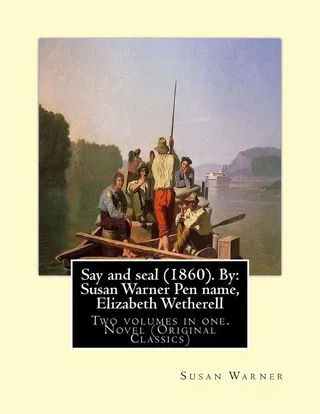
Susan Bogert Warner was an American Presbyterian author of religious fiction, children's books, and theology writings. She is well known for The Wide, Wide World. Her previous works include Queechy, The Hills of Shatemuck, Melbourne House, Daisy, Walks from Eden, House of Israel, What She Could, Opportunities, and House in Town. Warner and her sister, Anna, authored a series of semi-religious books that were extremely successful, including Say and Seal, Christmas Stocking, Books of Blessing, 8 vols., and The Law and the Testimony. Susan Warner was born in New York City on July 11, 1819. Warner could trace her family history back to the Puritans on both sides. Her father, Henry Warner, was a New York City lawyer originating from New England, and her mother, Anna Bartlett, was from a wealthy, fashionable family in Hudson Square. When Warner was a young child, her mother died, and her father's sister, Fanny, moved in with the Warners. Despite being wealthy, the father lost the majority of his income during the Panic of 1837, as well as via following lawsuits and disastrous investments.
More by Susan Warner













Why Readwise Books?
Readwise Books is an ebook & audiobook platform that automatically logs how much you and your friends read, making it fun and easy to read more. Learn more →