Report an issue
Tell us what's wrong and we'll take a look.
Thanks – we got it. We'll review and follow up if needed.
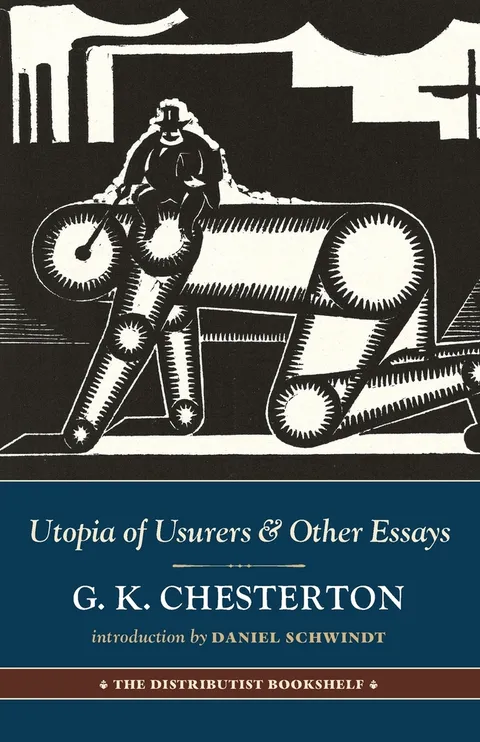
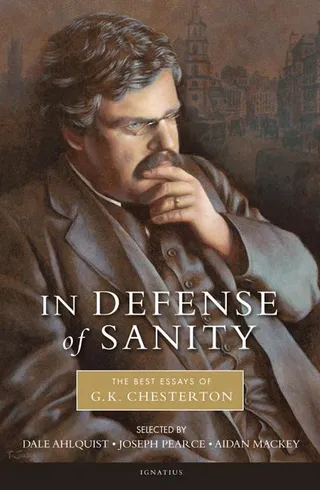
G.K. Chesterton understood that the small does not defeat the large by imitating its scale; it persists by refusal to be conformed to its errors. Instead of offering readers optimism, he offers them truth-a refusal to consider the battle between traditional sanity and modern madness finished. He understood that the fight was going badly but took up his position regardless, knowing that for men it is truth that matters, not "success" as the world defines it.
In this book, the battle at hand is that of the modern financial system and the deepest evil at its heart: usury or the collection of interest. Today, the "utopia of usurers" looks very much like an established fact. Usurers visible and invisible now hold financial claims against children who cannot yet protest, even against grandchildren not yet born. The rocket-builder keeps every eye on Mars while every pocket gets picked clean on the way there. Builders of "social networks" have nearly persuaded mankind that an artificial reality is the whole of reality. All seems lost.
But Chesterton would have gloried in such a moment, because he loved nothing better than a fight against long odds, and he would not have lost heart, because he knew that no matter how the numbers ran, the enemy's victory depends on an illusion-a very large and very expensive one, resting on ground that actually belongs to a great many other people. It is a brittle theatre. The curtain falls the moment enough of the audience stands up and walks out. The book you hold in your hands is a guide to unmasking that theatre for what it is.
G.K. Chesterton
G. K. Chesterton (1874-1936) was one of the most influential English writers of the twentieth century. His prolific and diverse output included journalism, philosophy, poetry, biography, Christian apologetics, fantasy, and detective fiction. Chesterton is well known for his reasoned apologetics, and even those who disagree with him have recognized the universal appeal of such works as Orthodoxy and The Everlasting Man. Chesterton routinely referred to himself as an "orthodox" Christian and came to identify such a position with Catholicism more and more, eventually converting to Roman Catholicism. George Bernard Shaw, Chesterton's "friendly enemy" according to Time magazine, said of him, "He was a man of colossal genius."
More by G.K. Chesterton


Why Readwise Books?
Readwise Books is an ebook & audiobook platform that automatically logs how much you and your friends read, making it fun and easy to read more. Learn more →