
The Primeval Forest
Report an issue
Tell us what's wrong and we'll take a look.
Thanks – we got it. We'll review and follow up if needed.
"There, in this sorry world of ours, goes a great man."--Albert Einstein, on Albert Schweitzer
In July of 1913, thirty-eight-year-old medical doctor Albert Schweitzer gave up his position as a respected professor at the University of Strasbourg and celebrated authority on music and philosophy in order to go as a physician to French Equatorial Africa (present-day Gabon). The Primeval Forest is Schweitzer's own fascinating story of these eventful years--a thrilling tale of his amazingly successful attempt to practice modern medicine and surgery in the face of wild elephant raids, marauding leopards, famine, an flood--a story rich in human interest and high drama.
Schweitzer describes how he and his wife, a qualified nurse, worked to establish a hospital in the steaming jungle at Lambaréné. At first they treated patients in the open air, amid unbelievably primitive conditions--with few drugs, medicines, or adequate instruments. But they worked tirelessly, caring for as many as forty cases a day, battling the misery caused by sleeping sickness, leprosy, pestilence, and plague. And, as the years went on, they gradually built a more permanent hospital to alleviate the terrible suffering of the Congo people.
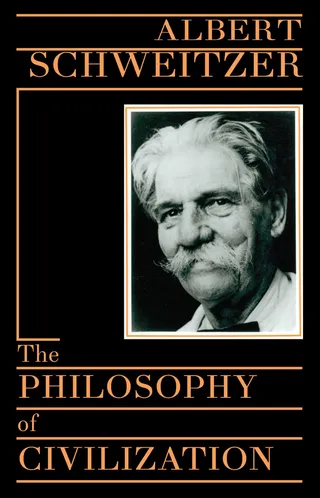
Albert Schweitzer
Albert Schweitzer, OM (14 January 1875 – 4 September 1965) was a German—and later French—theologian, organist, philosopher, physician, and medical missionary in Africa, also known for his interpretive life of Jesus. He was born in the province of Alsace-Lorraine, at that time part of the German Empire. He considered himself French and wrote in French. Schweitzer, a Lutheran, challenged both the secular view of Jesus as depicted by historical-critical methodology current at his time in certain academic circles, as well as the traditional Christian view. He received the 1952 Nobel Peace Prize for his philosophy of “Reverence for Life”, expressed in many ways, but most famously in founding and sustaining the Albert Schweitzer Hospital in Lambaréné, now in Gabon, west central Africa (then French Equatorial Africa). As a music scholar and organist, he studied the music of German composer Johann Sebastian Bach and influenced the Organ reform movement (Orgelbewegung).
More by Albert Schweitzer












Why Readwise Books?
Readwise Books is an ebook & audiobook platform that automatically logs how much you and your friends read, making it fun and easy to read more. Learn more →