Report an issue
Tell us what's wrong and we'll take a look.
Thanks – we got it. We'll review and follow up if needed.
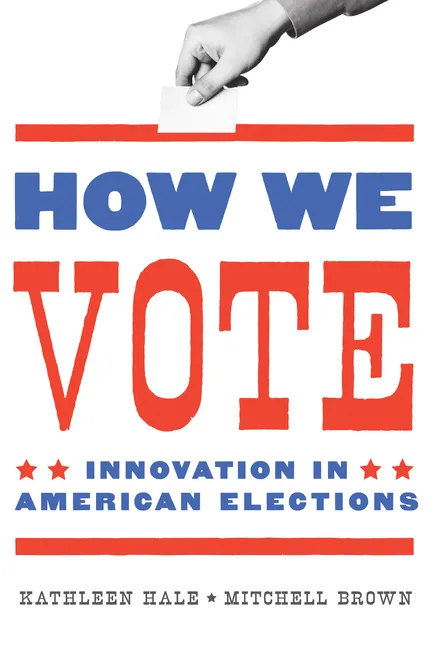
The idea of voting is simple, but the administration of elections in ways that ensure access and integrity is complex.
In How We Vote, Kathleen Hale and Mitchell Brown explore what is at the heart of our democracy: how elections are run. Election administration determines how ballots are cast and counted, and how jurisdictions try to innovate while also protecting the security of the voting process, as well as how election officials work.
Election officials must work in a difficult intergovernmental environment of constant change and intense partisanship. Voting practices and funding vary from state to state, and multiple government agencies, the judicial system, voting equipment vendors, nonprofit groups, and citizen activists also influence practices and limit change. Despite real challenges and pessimistic media assessments, Hale and Brown demonstrate that election officials are largely successful in their work to facilitate, protect, and evolve the voting process.
Using original data gathered from state and local election officials and policymakers across the United States, Hale and Brown analyze innovations in voter registration, voting options, voter convenience, support for voting in languages other than English, the integrity of the voting process, and voting system technology. The result is a fascinating picture of how we vote now and will vote in the future.
Kathleen Hale
Kathleen Hale is a professor in the department of political science at Auburn University, where she directs its graduate program in election administration. She is the author of the award-winning How Information Matters: Networks and Public Policy Innovation.
More by Kathleen Hale




Mitchell Brown
Mitchell Brown is a professor in the department of political science at Auburn University and associate editor of the Journal of Political Science Education.
More by Mitchell Brown


Why Readwise Books?
Readwise Books is an ebook & audiobook platform that automatically logs how much you and your friends read, making it fun and easy to read more. Learn more →