Report an issue
Tell us what's wrong and we'll take a look.
Thanks – we got it. We'll review and follow up if needed.
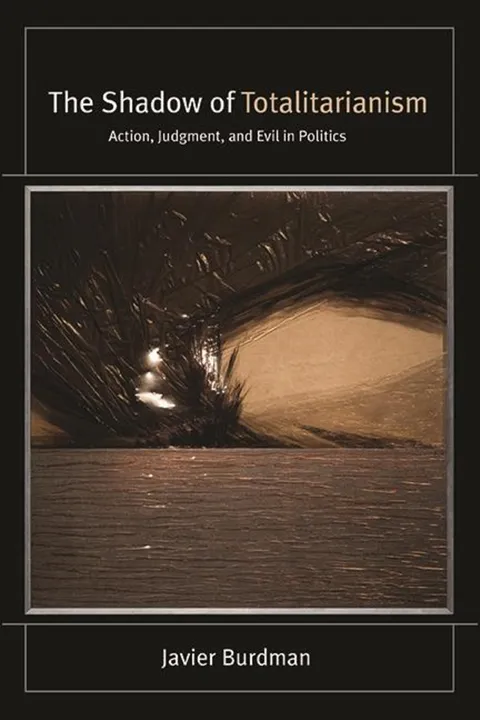
Examines the relationship of evil, action, and judgment in the work of Immanuel Kant, Hannah Arendt, and Jean-François Lyotard.
The Shadow of Totalitarianism develops a new way to think about the problem of evil in politics. Beginning with the commonplace idea that the rise of totalitarianism in the twentieth century marked the emergence of a new form of evil, Javier Burdman finds early seeds of thinking about this form in Immanuel Kant's moral philosophy. Far from being an isolated object of inquiry, evil, Burdman argues, has long shaped and been central to philosophical understandings of political action and judgment. Systematically analyzing the relationship between evil, action, and judgment in the work of Kant, Hannah Arendt, and Jean-François Lyotard, The Shadow of Totalitarianism aligns evil in politics with a desire for moral certainty, hence the emphasis on the need to accept and affirm uncertainty in current ethical theories. The careful philosophical analysis through which Burdman develops this inquiry contributes to a better understanding of some of the theoretical complexities involved in the problem of evil and provides conceptual tools with which to approach it.
Javier Burdman
Javier Burdman is Research Fellow in the School for Interdisciplinary Social Studies at the National University of San Martin in Argentina.


Why Readwise Books?
Readwise Books is an ebook & audiobook platform that automatically logs how much you and your friends read, making it fun and easy to read more. Learn more →