Report an issue
Tell us what's wrong and we'll take a look.
Thanks – we got it. We'll review and follow up if needed.
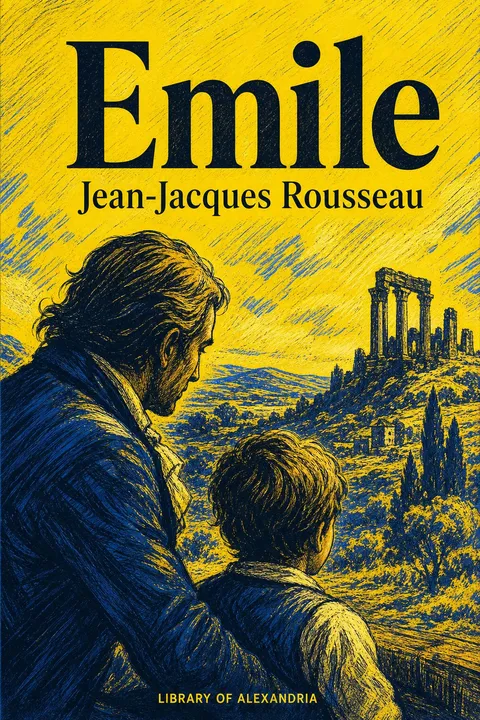
What if the purpose of education were not to produce an obedient pupil, but an independent human being?
In Emile, Jean-Jacques Rousseau imagines an education shaped around a child's natural development rather than the demands of convention. A tutor guides a boy from childhood toward adult life, using experience, curiosity, and encounters with the world to cultivate understanding. The resulting work blends philosophical argument with fictional narrative, turning the upbringing of one child into a searching inquiry into human nature.
First published in 1762, this landmark of Enlightenment thought asks how people can learn to judge for themselves while living among others. Rousseau challenges premature instruction and unquestioned authority, explores the formation of moral character, and considers the tensions between personal independence and social obligation. His proposals remain provocative, inviting readers to examine both the promise and the limits of an education governed by nature.
What readers find inside:
- Learning through experience - The tutor makes practical encounters with the world central to the child's growing understanding.
- Stages of development - Rousseau considers how education should respond to changing capacities from childhood to adulthood.
- Independent judgment - The work asks how a learner can develop reason without merely accepting the opinions of others.
- Moral formation - Questions of conscience, sympathy, and responsibility connect education with the conduct of life.
- Nature and society - The narrative examines the difficulty of preserving personal integrity within a world shaped by convention.
For readers of educational philosophy, students of the Enlightenment, and parents or teachers interested in the history of child-centered learning, Emile offers an enduring challenge to familiar assumptions about growing up.
Begin this thought-provoking journey into what it means to educate a person for an independent and responsible life.
Jean-Jacques Rousseau
Jean-Jacques Rousseau (1712–1778) was one of the leading figures of the French Enlightenment. The author of popular novels such as Emile, or On Education (1762), he achieved immortality with the publication of philosophical treatises such as The Social Contract (1762) and A Discourse on Inequality (1754). His ideas would serve as the bedrock for leaders of both the American and French Revolutions.
More by Jean-Jacques Rousseau


Why Readwise Books?
Readwise Books is an ebook & audiobook platform that automatically logs how much you and your friends read, making it fun and easy to read more. Learn more →