Report an issue
Tell us what's wrong and we'll take a look.
Thanks – we got it. We'll review and follow up if needed.
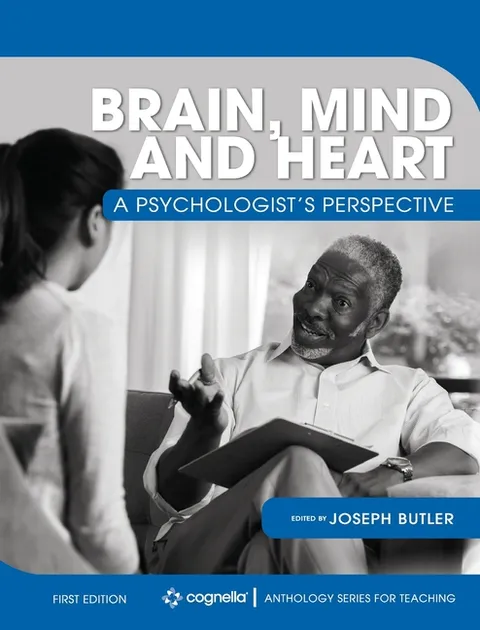
Brain, Mind, and Heart: A Psychologist's Perspective provides students with a collection of curated readings that guide them through a diverse range of mental phenomena, hard-to-explain behaviors, new perspectives on the meaning of love, and other intriguing areas of the psychology discipline.
The anthology exposes readers to in-depth research to help them expand their knowledge and understanding of the human mental landscape, as well as psychological theories and how they apply within the real world. Dedicated chapters explore the structure of the psyche; addiction and altruism; optimism, emotional support, and depression among first-year university students; creative thinking and innovation; and more. Each chapter includes an introduction, pre-reading questions, and insightful, research-based articles.
Designed to appeal to readers' sense of psychological curiosity, Brain, Mind, and Heart is an ideal resource for foundational courses in psychology, as well as any course that touches upon psychological concepts and explorations of the human mind.
Joseph Butler
Joseph Butler (May 18, 1692 - June 16, 1752) was an English Anglican bishop, theologian, apologist, and philosopher born in Wantage, Berkshire (now Oxfordshire). He is well-known for his attacks of Deism, Thomas Hobbes' egoism, and John Locke's personal identity theory. Butler inspired a wide range of philosophers and religious thinkers, including David Hume, Thomas Reid, Adam Smith, Henry Sidgwick, John Henry Newman, and C. D. Broad, and is often regarded as "one of the pre-eminent English moralists." He had a significant, if underappreciated, influence on the development of 18th-century economic language, inspiring the Dean of Gloucester and political economist Josiah Tucker. Butler was born on the 18th of May, 1692. Butler, the son of a Presbyterian linen draper, was meant for the ministry of that church and enrolled in Samuel Jones's dissenting seminary at Gloucester (later Tewkesbury) for that purpose, along with future archbishop Thomas Secker. He started a covert connection with Anglican theologian and philosopher Samuel Clarke there. He opted to join the Church of England in 1714 and enrolled in Oriel College, Oxford, where he received a Bachelor of Arts degree in 1718 and was declared a Doctor of Civil Law on December 8, 1733.


Why Readwise Books?
Readwise Books is an ebook & audiobook platform that automatically logs how much you and your friends read, making it fun and easy to read more. Learn more →