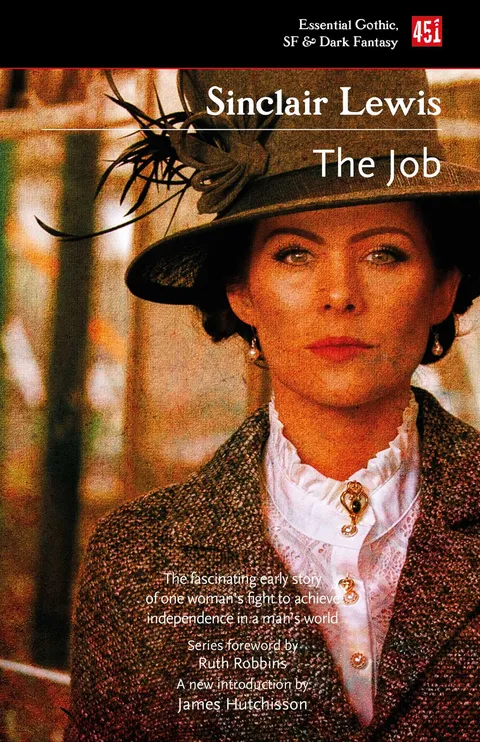
The Job
Report an issue
Tell us what's wrong and we'll take a look.
Thanks – we got it. We'll review and follow up if needed.
Sinclair Lewis' scandalous tale of Una Golden, who dared to work, marry, divorce and find success in the male-dominated society of New York in the early 1900s.
Sinclair Lewis, the first American to win the Nobel Prize for literature, and a writer lauded both for his craft and his principles, wrote The Job as a statement of female empowerment, and self-determination over societal expectation. Written in the early years of the 1900s Lewis' central character, highly unusual for the era, is a woman, Una Golden, who gains work in an exclusively male world of commercial real estate. Golden struggles for the recognition of her male peers while balancing romantic and work life; she marries, divorces, continues to work hard and finally emerges triumphant on her own terms.
Foundations of Feminist Fiction. The early 1900s saw a quiet revolution in literature dominated by male adventure heroes. Both men and women moved beyond the norms of the male gaze to write from a different gender perspective, sometimes with female protagonists, but also expressing the universal freedom to write on any subject whatsoever.
Sinclair Lewis
Sinclair Lewis (1885–1951) was the first American writer to win the Nobel Prize in Literature. In 1926 Lewis’s novel Arrowsmith garnered the Pulitzer Prize, which the author refused. His work has been lauded for its critical insight into capitalism and materialist culture in America.
More by Sinclair Lewis












Why Readwise Books?
Readwise Books is an ebook & audiobook platform that automatically logs how much you and your friends read, making it fun and easy to read more. Learn more →