Report an issue
Tell us what's wrong and we'll take a look.
Thanks – we got it. We'll review and follow up if needed.
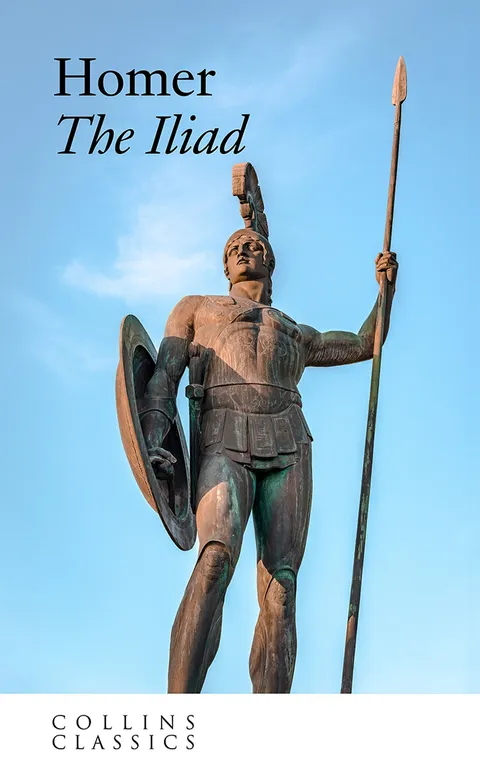
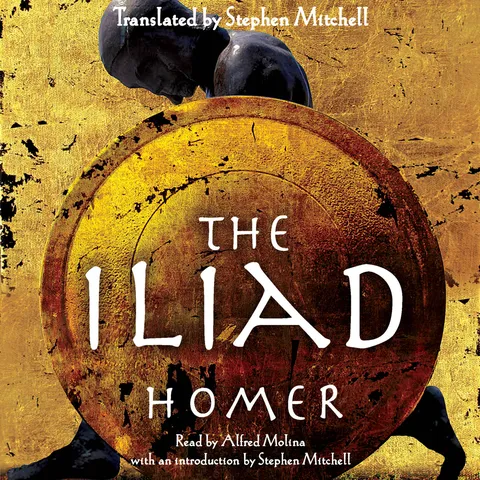
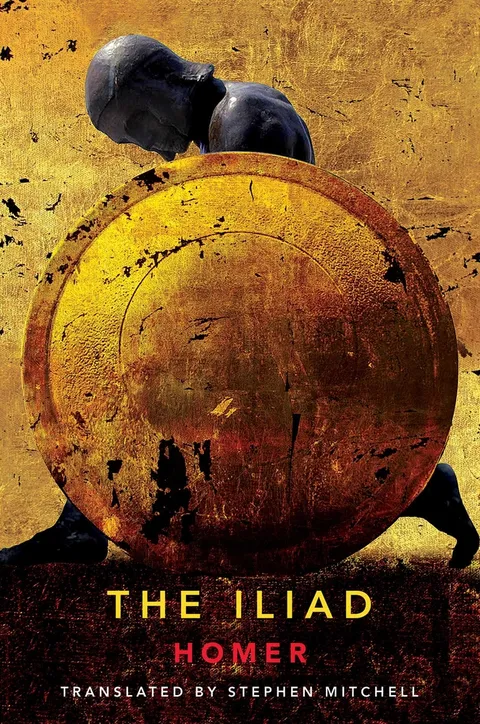
From the renowned translator of Rilke, Tao Te Ching, and Gilgamesh, a vivid new translation of Western civilization's foundational epic: The Iliad.Tolstoy called the Iliad a miracle; Goethe said that it always thrust him into a state of astonishment. Homer's story is thrilling, and his Greek is perhaps the most beautiful poetry ever sung or written. But until now, even the best English translations haven't been able to re-create the energy and simplicity, the speed, grace, and pulsing rhythm of the original. Now, thanks to the power of Stephen Mitchell's language, the Iliad's ancient story comes to moving, vivid new life, and we are carried along by a poetry that lifts even the most devastating human events into the realm of the beautiful. Mitchell's Iliad is also the first translation based on the work of the preeminent Homeric scholar Martin L. West, whose edition of the original Greek identifies many passages that were added after the Iliad was first written down, to the detriment of the music and the story. Omitting these hundreds of interpolated lines restores a dramatically sharper, leaner text. In addition, Mitchell's illuminating introduction opens the epic still further to our understanding and appreciation.
Homer
Homer (c. 9th-8th century BCE) was an ancient Greek blind poet traditionally credited with authoring the epic poems "The Iliad" and "The Odyssey". Collectively known as the "Homeric Epics", these works primarily recount the Trojan War and tales of maritime adventure; they were synthesized from orally transmitted folk songs and composed in dactylic hexameter.The historical reality of Homer is a subject of debate; some scholars suggest the name may have been a collective designation for itinerant bards, with the epics taking shape over centuries of oral tradition. Most accounts place his birthplace on the island of Chios or in Smyrna in the eastern Aegean, describing him as a blind, wandering musician who played the lyre. The etymology of the name "Homer" remains inconclusive, though it may be linked to the concept of "assembling" or "fitting together". He is generally believed to have lived between the 9th and 8th centuries BCE, and his epics have profoundly influenced Western religious, cultural, and ethical thought.
More by Homer

Stephen Mitchell
Translated by
Stephen Mitchell's many books include the bestselling Tao Te Ching, Gilgamesh, and The Second Book of the Tao, as well as The Selected Poetry of Rainer Maria Rilke, The Gospel According to Jesus, Bhagavad Gita, The Book of Job, and Meetings with the Archangel.












Why Readwise Books?
Readwise Books is an ebook & audiobook platform that automatically logs how much you and your friends read, making it fun and easy to read more. Learn more →