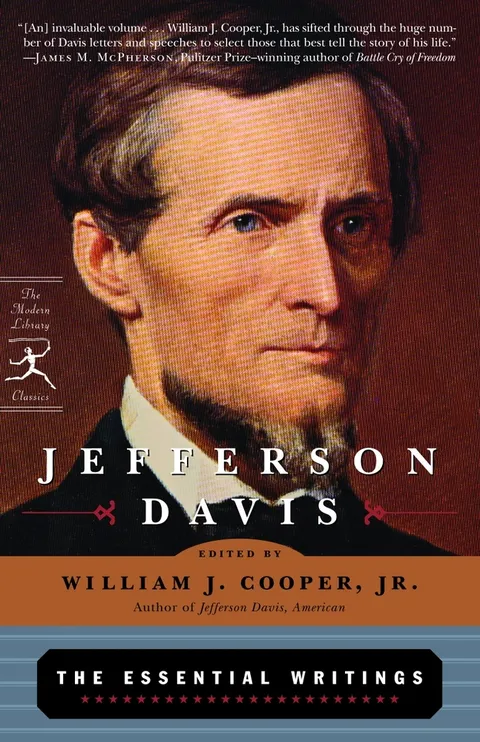
Jefferson Davis: The Essential Writings
Report an issue
Tell us what's wrong and we'll take a look.
Thanks – we got it. We'll review and follow up if needed.
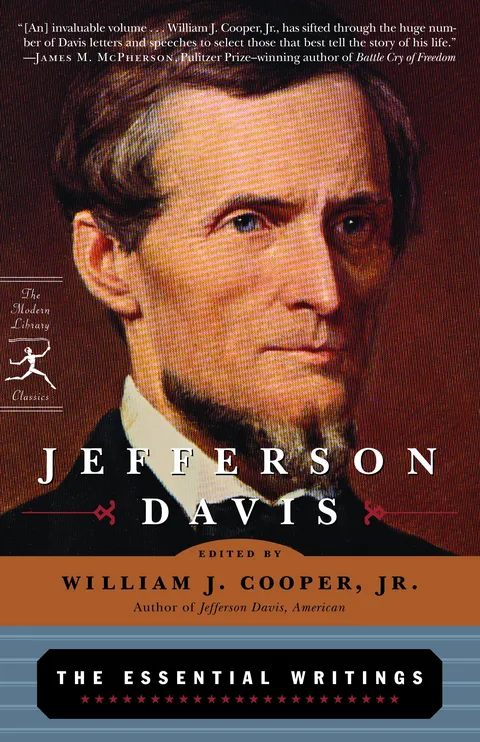
As William J. Cooper, Jr., writes in his Introduction, "Davis's notability does not come solely from his crucial role in the Civil War. Born on the Kentucky frontier in the first decade of the nineteenth century, he witnessed and participated in the epochal transformation of the United States from a fledgling country to a strong nation spanning the continent. In his earliest years his father moved farther south and west to Mississippi. As a young army officer just out of West Point, he served on the northwestern and southwestern frontiers in an army whose chief mission was to protect settlers surging westward. Then, in 1846 and 1847, as colonel of the First Mississippi Regiment, he fought in the Mexican War, which resulted in 1848 in the Mexican Cession, a massive addition to the United States of some 500,000 square miles, including California and the modern Southwest. As secretary of war and U.S. senator in the 1850s, he advocated government support for the building of a transcontinental railroad that he believed essential to bind the nation from ocean to ocean."
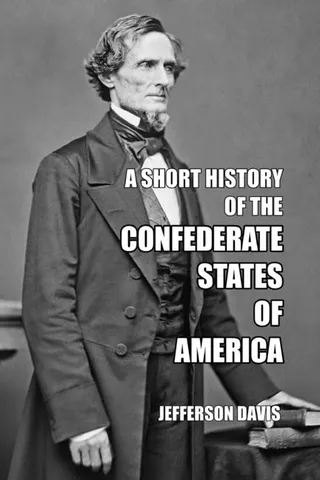
Jefferson Davis
Jefferson Davis was an American soldier and politician, but is best known for being the only president of the Confederate States of America. Educated as a soldier at the U.S. Military Academy at West Point, Davis served two tours of military service, first during the Black Hawk War in 1832 and later during the Mexican-American War from 1846-48. Following the Mexican-American War, Davis was appointed to the United States Senate, and later served as secretary of war to President Pierce. Although Davis, as a senator, had argued against secession, he resigned his role in the federal government and returned to his home state of Mississippi following that state’s successful succession vote, and was acclaimed president of the Confederate States of America in 1861.
At the end of the American Civil War in 1865, Davis was captured and accused of treason, and his citizenship was revoked. Davis’s 1881 memoir, The Rise and Fall of the Confederate Government did much to restore his reputation, as did his efforts to encourage reconciliation, however, his citizenship was not restored until 1978. Jefferson Davis died in 1889.
More by Jefferson Davis







Why Readwise Books?
Readwise Books is an ebook & audiobook platform that automatically logs how much you and your friends read, making it fun and easy to read more. Learn more →