
The Social Contract
Report an issue
Tell us what's wrong and we'll take a look.
Thanks – we got it. We'll review and follow up if needed.
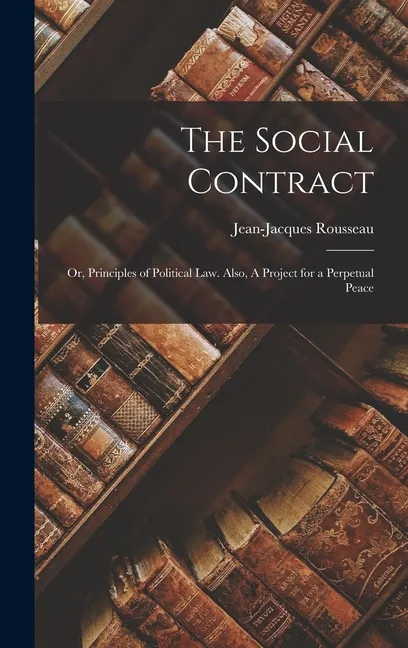
The Social Contract (1762) by Jean-Jacques Rousseau argues that legitimate political authority comes not from force or divine right, but from a social contract agreed upon by free individuals. Rousseau proposes that people unite to form a collective body politic and submit their individual wills to the general will, which represents the common good. True freedom, he claims, is found in obeying laws one has prescribed for oneself through this collective will. The book explores sovereignty, law, and government, emphasizing popular sovereignty and equality as the foundation of a just state.
Jean-Jacques Rousseau
Jean-Jacques Rousseau (1712–1778) was one of the leading figures of the French Enlightenment. The author of popular novels such as Emile, or On Education (1762), he achieved immortality with the publication of philosophical treatises such as The Social Contract (1762) and A Discourse on Inequality (1754). His ideas would serve as the bedrock for leaders of both the American and French Revolutions.
More by Jean-Jacques Rousseau





Why Readwise Books?
Readwise Books is an ebook & audiobook platform that automatically logs how much you and your friends read, making it fun and easy to read more. Learn more →