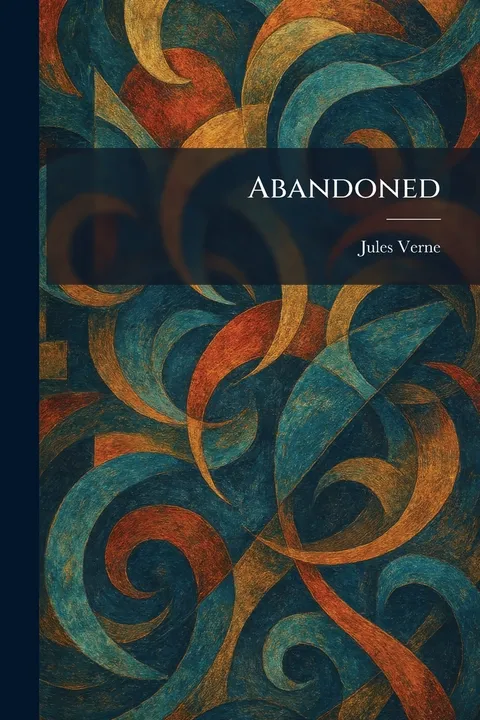
Abandoned
Report an issue
Tell us what's wrong and we'll take a look.
Thanks – we got it. We'll review and follow up if needed.

"Abandoned" is the gripping second volume of Jules Verne's epic adventure, "The Mysterious Island". Following their dramatic escape from the American Civil War via hot air balloon, a group of resourceful castaways has established a thriving colony on the remote Lincoln Island in the Pacific Ocean. This installment focuses on the colonists' discovery of a fellow human being on a neighboring isle-a man reduced to a wild, animalistic state after years of total isolation.
As the group works to restore the stranger's humanity and integrate him into their society, they continue to face the challenges of survival and the unexplained mysteries of their new home. From the engineering marvels created by the brilliant Cyrus Smith to the looming presence of an unseen benefactor, the narrative explores themes of redemption, ingenuity, and the indomitable spirit of mankind. Verne blends scientific curiosity with high-stakes exploration, creating a timeless tale of survival that remains a cornerstone of classic adventure literature. The story of "Abandoned" is an essential chapter in the struggle to reclaim civilization from the wilderness.
This work has been selected by scholars as being culturally important, and is part of the knowledge base of civilization as we know it. This work was reproduced from the original artifact, and remains as true to the original work as possible. Therefore, you may see the original copyright references, library stamps (as most of these works have been housed in our most important libraries around the world), and other notations in the work.
This work is in the public domain in the United States of America, and possibly other nations. Within the United States, you may freely copy and distribute this work, as no entity (individual or corporate) has a copyright on the body of the work.
As a reproduction of a historical artifact, this work may contain missing or blurred pages, poor pictures, errant marks, etc. Scholars believe, and we concur, that this work is important enough to be preserved, reproduced, and made generally available to the public. We appreciate your support of the preservation process, and thank you for being an important part of keeping this knowledge alive and relevant.
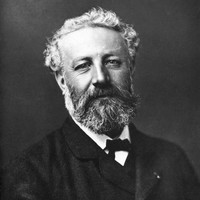
Jules Verne
Jules Verne (1828-1905) is considered by many the father of science fiction. Born in Nantes, France, he studied law but turned to writing opera libretti until the 1863 publication of Five Weeks in a Balloon, the first of his Extraordinary Voyages series. Its success encouraged him to produce a number of classic and prophetic science fiction novels, including Journey to the Center of the Earth and Twenty Thousand Leagues under the Sea. His stories foresaw many scientific and technological developments, including the submarine, television, and space travel.
More by Jules Verne



Why Readwise Books?
Readwise Books is an ebook & audiobook platform that automatically logs how much you and your friends read, making it fun and easy to read more. Learn more →