
A Study in Scarlet
Report an issue
Tell us what's wrong and we'll take a look.
Thanks – we got it. We'll review and follow up if needed.
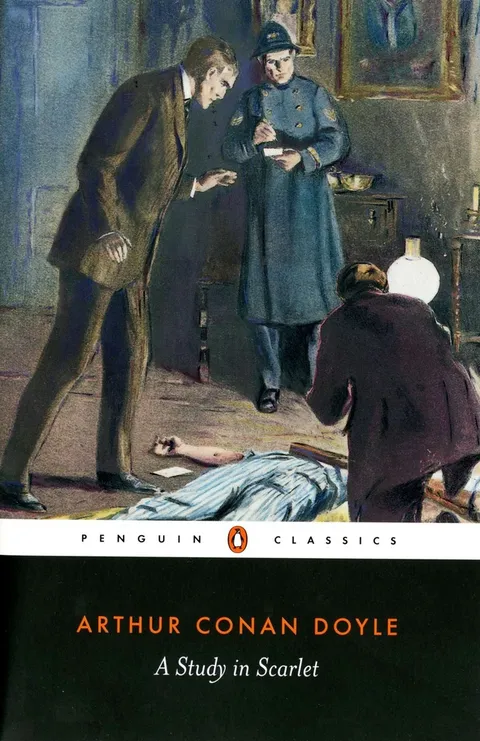

Introduction by Anne Perry
Includes newly commissioned endnotes
In 1887, a young Arthur Conan Doyle published A Study in Scarlet, creating an international icon in the quick-witted sleuth Sherlock Holmes. In this very first Holmes mystery, the detective introduces himself to Dr. John H. Watson with the puzzling line “You have been in Afghanistan, I perceive,” and so begins Watson’s, and the world’s, fascination with this enigmatic character. In A Study in Scarlet, Doyle presents two equally perplexing mysteries for Holmes to solve: one a murder that takes place in the shadowy outskirts of London, in a locked room where the haunting word Rache is written upon the wall, the other a kidnapping set in the American West. Picking up the “scarlet thread of murder running through the colourless skein of life,” Holmes demonstrates his uncanny knack for finding the truth, tapping into powers of deduction that still captivate readers today.
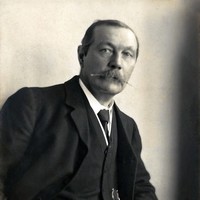
Sir Arthur Conan Doyle
Sir Arthur Conan Doyle (1859-1930) was a writer and physician most noted for his fictional stories about the detective Sherlock Holmes, the first scientific detective, which are generally considered milestones in the field of crime fiction. Before becoming a writer, he attended the University of Edinburgh to train as a physician, and it was from his teacher, Joseph Bell, that he learned much of what would inspire Holmes's skills of deduction. He also wrote science fiction stories, historical novels, plays, romances, poetry, and nonfiction. After his son Kingsley died in the first World War, he became a convert to spiritualism and a social reformer who used his investigative skills to prove the innocence of individuals.
More by Sir Arthur Conan Doyle


























Why Readwise Books?
Readwise Books is an ebook & audiobook platform that automatically logs how much you and your friends read, making it fun and easy to read more. Learn more →