Report an issue
Tell us what's wrong and we'll take a look.
Thanks – we got it. We'll review and follow up if needed.
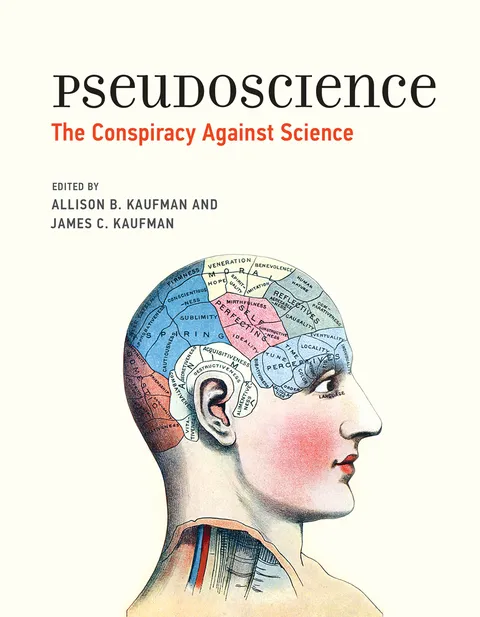
Case studies, personal accounts, and analysis show how to recognize and combat pseudoscience in our post-truth, fake news world.
“ . . . an invaluable volume that examines the cognitive biases that lead to pseudoscience, the history of pseudoscience, and the reasons for its wide acceptance.” —Science-Based Medicine
In a post-truth, fake news world, we are particularly susceptible to the claims of pseudoscience. When emotions and opinions are more widely disseminated than scientific findings, and self-proclaimed experts get their expertise from Google, how can the average person distinguish real science from fake? This book examines pseudoscience from a variety of perspectives. Covering health, agriculture, food science, infectious diseases, and more, contributors examine the:
• Basics of pseudoscience, including issues of cognitive bias
• Costs of pseudoscience, from naturopathy to logical fallacies of anti-vaccination
• Perceptions of scientific soundness
• Mainstream presence of “integrative medicine,” hypnosis, and parapsychology
• Use of case studies and new media in science advocacy
Through case studies, analysis, and personal accounts, this fascinating study shows how to recognize pseudoscience, why it is so widely accepted, and how to advocate for real science.
James C. Kaufman
Dr James C. Kaufman is a Professor of Educational Psychology at the Neag School of Education at the University of Connecticut. He is the author or editor of more than fifty books and has written more than four hundred papers, including theoretical contributions such as the Four-C model of creativity (with Ron Beghetto).






Why Readwise Books?
Readwise Books is an ebook & audiobook platform that automatically logs how much you and your friends read, making it fun and easy to read more. Learn more →