Report an issue
Tell us what's wrong and we'll take a look.
Thanks – we got it. We'll review and follow up if needed.
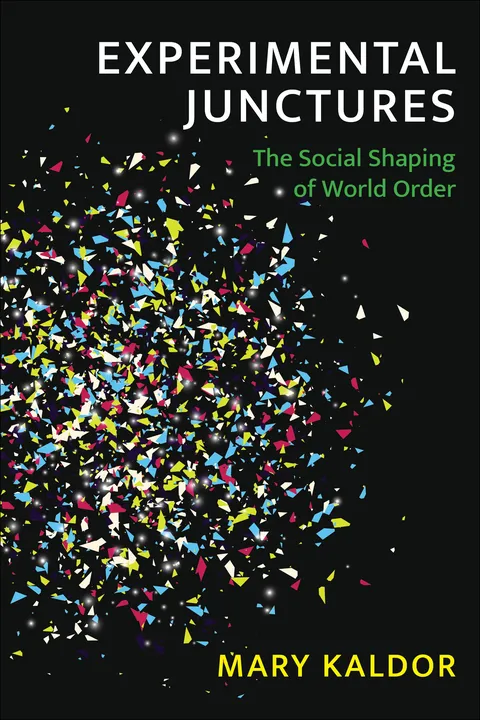
We are witnessing a potential turning point in world history. The American social and political model—mass production and consumption relying on fossil fuels—has run its course, but no alternative model has yet emerged to take its place. Why do such profound ruptures occur in global affairs, and how might they be resolved?
Mary Kaldor introduces a new concept, “experimental junctures,” to account for what happens when political institutions are out of kilter with far-reaching economic, social, and technological change. In these times of existential crisis, political leaders must act, but their frameworks for action are out of date. Instead, they experiment with ideas drawn from outside their ranks—some with disastrous consequences, others potentially able to command a new long-term consensus.
Putting forward a theory of political innovation that foregrounds social movements, Kaldor shows that during experimental junctures, the political class borrows from civil society. She warns that if political leaders today do not embrace democratic experimentalism and transform institutions at all levels, the prognosis could be a catastrophic world war. A capstone work from a major scholar of political authority and violence, Experimental Junctures makes a timely case for the emergence of a new global order after American hegemony.
Mary Kaldor
Mary Kaldor is Professor of Global Governance and Director of the Civil Society and Human Security Research Unit at the London School of Economics and Political Science, and CEO of the DFID-funded Justice and Security Research Programme. Her areas of research include European security, global civil society, new wars and human security.
More by Mary Kaldor








Why Readwise Books?
Readwise Books is an ebook & audiobook platform that automatically logs how much you and your friends read, making it fun and easy to read more. Learn more →