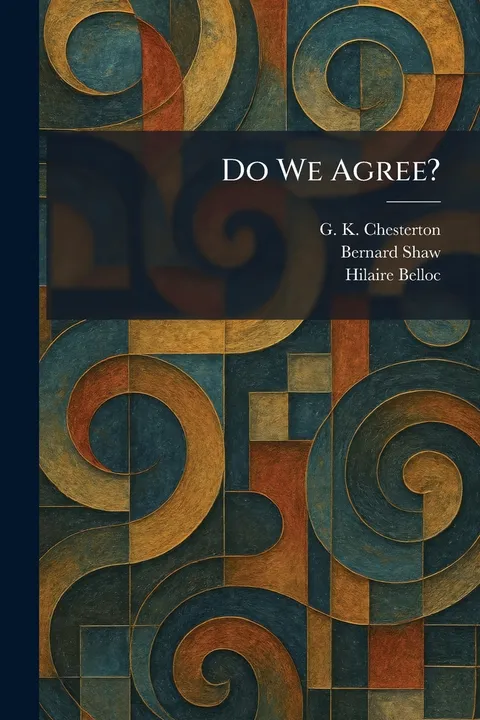
Do We Agree?
Report an issue
Tell us what's wrong and we'll take a look.
Thanks – we got it. We'll review and follow up if needed.
"Do We Agree?" presents a legendary intellectual encounter between three of the early twentieth century's most influential thinkers: G.K. Chesterton, Bernard Shaw, and Hilaire Belloc. This work preserves the transcript of their celebrated 1927 public debate, a confrontation of ideas that remains a masterclass in rhetoric, wit, and social philosophy.
The central tension of the text lies in the clash between Chesterton's Distributism and Shaw's Socialism. With Belloc presiding as the chairman, the two giants of English letters engage in a spirited and often humorous dialogue regarding the ownership of property, the role of the state, and the preservation of human liberty in an industrial age. Chesterton advocates for the widespread distribution of private property as the foundation of freedom, while Shaw offers a compelling defense of collective ownership and socialized governance.
Beyond its historical significance, "Do We Agree?" offers a profound look at the divergent paths proposed for modern civilization. It is an essential read for students of political theory, economic history, and those who appreciate the art of civil disagreement between friends who hold fundamentally different worldviews.
This work has been selected by scholars as being culturally important, and is part of the knowledge base of civilization as we know it. This work was reproduced from the original artifact, and remains as true to the original work as possible. Therefore, you may see the original copyright references, library stamps (as most of these works have been housed in our most important libraries around the world), and other notations in the work.
This work is in the public domain in the United States of America, and possibly other nations. Within the United States, you may freely copy and distribute this work, as no entity (individual or corporate) has a copyright on the body of the work.
As a reproduction of a historical artifact, this work may contain missing or blurred pages, poor pictures, errant marks, etc. Scholars believe, and we concur, that this work is important enough to be preserved, reproduced, and made generally available to the public. We appreciate your support of the preservation process, and thank you for being an important part of keeping this knowledge alive and relevant.
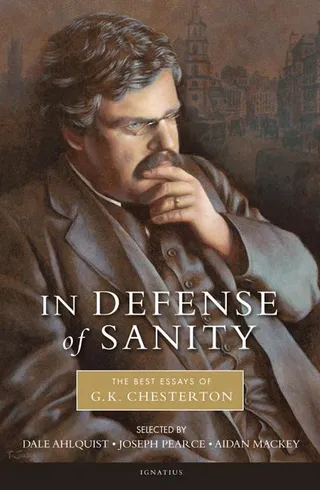
G K Chesterton
G. K. Chesterton (1874–1936) was a prolific English journalist and author best known for his mystery series featuring the priest-detective Father Brown and for the metaphysical thriller The Man Who Was Thursday. Baptized into the Church of England, Chesterton underwent a crisis of faith as a young man and became fascinated with the occult. He eventually converted to Roman Catholicism and published some of Christianity’s most influential apologetics, including Heretics and Orthodoxy.
More by G K Chesterton
Bernard Shaw
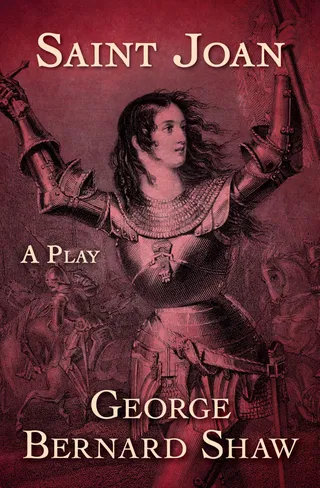
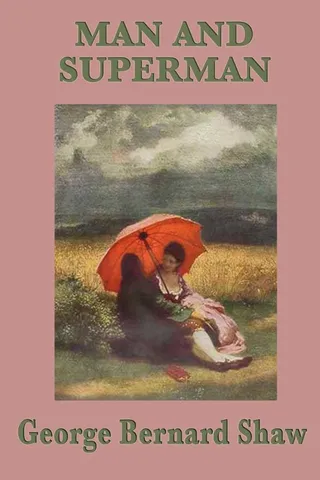
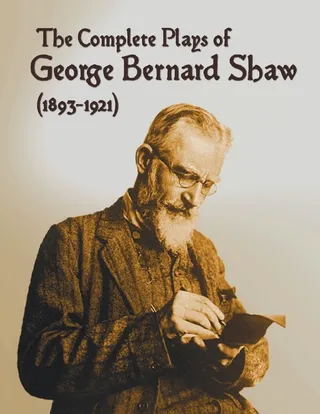
Bernard Shaw, acclaimed Irish playwright and Nobel laureate, has left an indelible mark on Western theater, culture, and politics. Over the course of his life, he wrote more than sixty plays that addressed prevailing social problems through comedy. Shaw was also a prolific essayist and lecturer on economics and sociological subjects, and was eventually awarded the Nobel Prize in Literature for his work, marked by its use of stunning satire to encapsulate humanity.
More by Bernard Shaw
Hilaire Belloc
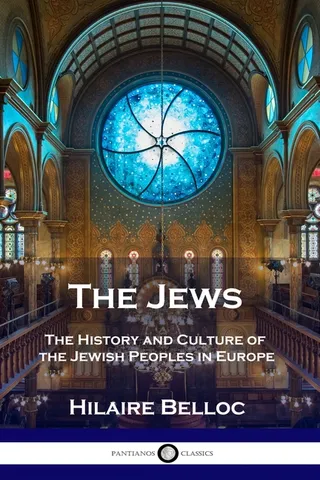
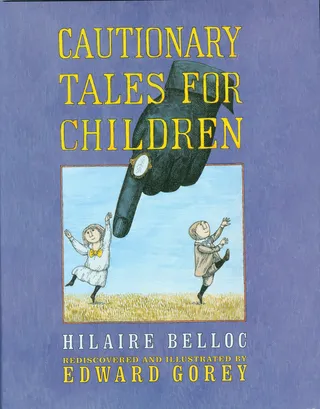
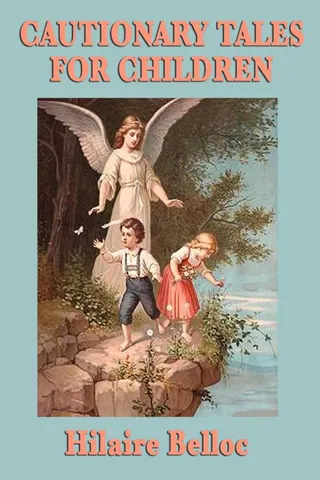
HILAIRE BELLOC was a writer and historian who was born in France on July 27, 1870, and died on July 16, 1953. Belloc also spoke in public, wrote poetry, sailed, satirized, wrote letters, served in the army, and worked for political change. His work was strongly affected by his Catholic faith. In 1902, Belloc became a naturalized British person, but he kept his French citizenship. He was President of the Oxford Union while he was at Oxford University. As a member of the British Parliament from 1906 to 1910, he was one of the few who was proudly Catholic. Belloc was known for getting into arguments, and he had a number of running feuds. He was also good friends with G. K. Chesterton and worked with him. "Chesterbelloc" was a nickname given to Belloc and Chesterton by their friend and regular debate opponent, George Bernard Shaw. Belloc wrote much more than just religious poems. He also wrote funny verse for kids. "Jim, who ran away from his nurse and was eaten by a lion," and "Matilda, who told lies and was burned to death" were two of his best-known and most-sold stories for kids. He wrote a lot of trip books and biographies of famous people, like The Path to Rome (1902).
More by Hilaire Belloc






Why Readwise Books?
Readwise Books is an ebook & audiobook platform that automatically logs how much you and your friends read, making it fun and easy to read more. Learn more →