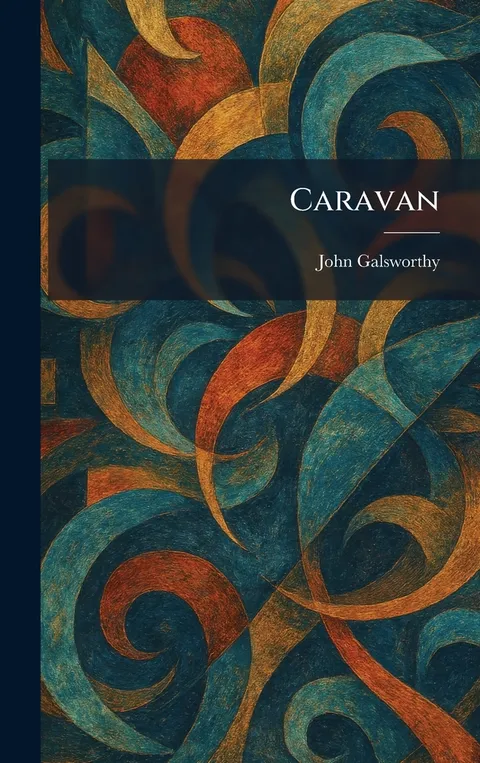
Caravan
Report an issue
Tell us what's wrong and we'll take a look.
Thanks – we got it. We'll review and follow up if needed.
"Caravan" is an expansive collection of short fiction by the Nobel Prize-winning author John Galsworthy. This anthology showcases the breadth of Galsworthy's narrative skill, gathering together a diverse array of stories that explore the complexities of human nature and the intricacies of British social life. Known for his keen observation of the Edwardian and post-War eras, Galsworthy delves into themes of morality, class distinctions, and the subtle emotional undercurrents of everyday existence.
From poignant character sketches to sharp social critiques, the tales within "Caravan" offer a panoramic view of early 20th-century society. Galsworthy's prose is marked by its elegance and profound empathy, capturing the quiet struggles and moral dilemmas of his characters with precision. As a master of the short story form, he examines the tension between tradition and modernity, as well as the universal search for justice and understanding. This collection remains a vital testament to Galsworthy's literary legacy, providing readers with a rich tapestry of life's many journeys through the lens of one of English literature's most esteemed figures.
This work has been selected by scholars as being culturally important, and is part of the knowledge base of civilization as we know it. This work was reproduced from the original artifact, and remains as true to the original work as possible. Therefore, you may see the original copyright references, library stamps (as most of these works have been housed in our most important libraries around the world), and other notations in the work.
This work is in the public domain in the United States of America, and possibly other nations. Within the United States, you may freely copy and distribute this work, as no entity (individual or corporate) has a copyright on the body of the work.
As a reproduction of a historical artifact, this work may contain missing or blurred pages, poor pictures, errant marks, etc. Scholars believe, and we concur, that this work is important enough to be preserved, reproduced, and made generally available to the public. We appreciate your support of the preservation process, and thank you for being an important part of keeping this knowledge alive and relevant.
John Galsworthy
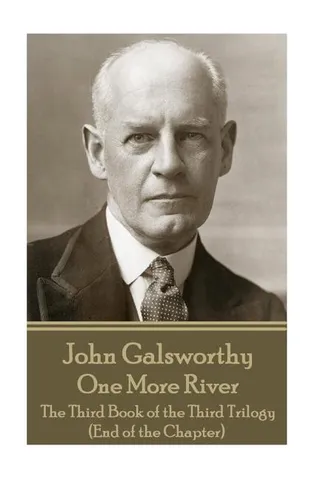
John Galsworthy was an English dramatist and novelist who lived from 14 August 1867 to 31 January 1933. His novels, The Forsyte Saga, and two more trilogies, A Modern Comedy and End of the Chapter, are his best-known works. He received the Nobel Prize in Literature in 1932. Galsworthy, who came from a wealthy upper-middle-class family, was expected to become a lawyer, but he found the profession unappealing, so he resorted to literature. Before his first book, The Man of Property, about the Forsyte family, was released in 1897, he was thirty years old. It wasn't until that book-the first of its kind-that he saw true popularity. His debut play, The Silver Box, had its London premiere the same year. As a writer, he gained notoriety for his socially conscious plays that addressed issues such as the politics and morality of war, the persecution of women, the use of solitary confinement in prisons, the battle of workers against exploitation, and jingoism. The patriarch, Old Jolyon, is based on Galsworthy's father, and the Forsyte family in the collection of books and short tales known as The Forsyte Chronicles is comparable to Galsworthy's family in many aspects.
More by John Galsworthy



Why Readwise Books?
Readwise Books is an ebook & audiobook platform that automatically logs how much you and your friends read, making it fun and easy to read more. Learn more →