Report an issue
Tell us what's wrong and we'll take a look.
Thanks – we got it. We'll review and follow up if needed.
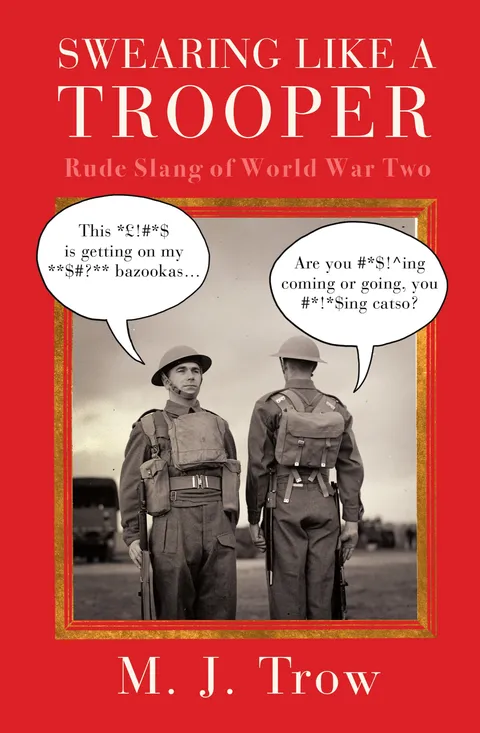
In September 1939, much military slang still dated to the trenches of 1914-18 - for instance words such as 'Berthas' (meaning big breasts), taken from the German Big Bertha gun . But World War II soon gave birth to a new wave of armed forces slang such as 'wizard prang', D.S.O (Dick Shot Off), and bazookas (back to breasts again).
Some British terms came from the army's links with India, for instance 'zig-zig' or 'jig-jig' meaning sexual intercourse. Officers' euphemisms had to be acceptable in the Mess, for instance to 'lose one's cherry', 'extra-curricular activities', 'naval engagements' and 'dishonourable discharge'.
The Americans were over-paid, over-sexed and over here and brought new slang with them: 'nugget' for a girl, 'on the rag' meant having a period and 'cheesecake' was GI slang for a gorgeous girl. And this was People's War, with civilians, women and children effectively in the front line. Women in particular were smoking, drinking, dancing and swearing like no female generation before...
Mei Trow
Mei is a military historian with a backlist including ghosting Survivor by Sam Pivnik (Hodder 2012), Survivor on the Kwai for Reg Twigg (Penguin, 2013) Last Gentleman of the SAS (Mainstream, 2015) and War Crimes (Pen and Sword, 2008). He was also the ghost for Ebury's Sunday Times bestseller, The Secret Train Robber, which revealed the real mastermind behind the infamous Great Train Robbery (HB May 15, 4k TCM/ PB May 16, 3k TCM).
More by Mei Trow


Why Readwise Books?
Readwise Books is an ebook & audiobook platform that automatically logs how much you and your friends read, making it fun and easy to read more. Learn more →