Report an issue
Tell us what's wrong and we'll take a look.
Thanks – we got it. We'll review and follow up if needed.
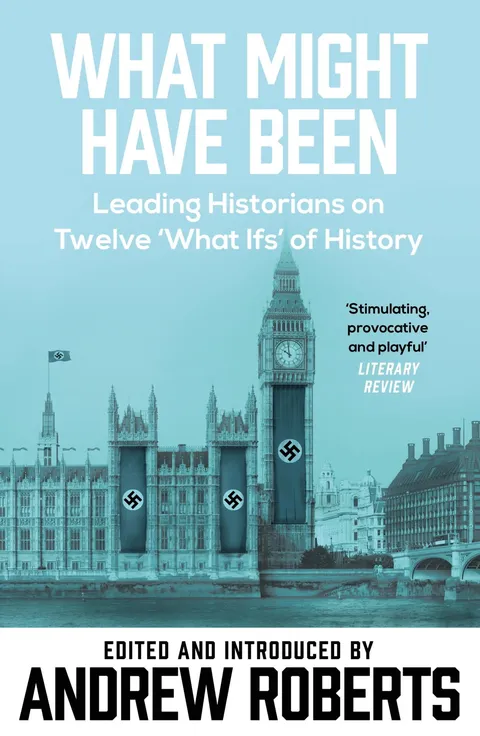
A dozen star historians on what might have happened at history's turning points if the dice had fallen differently.
'Stimulating, provocative and playful' Literary Review
Throughout history, great and terrible events have often hinged upon luck. Andrew Roberts has asked a team of twelve leading historians and biographers what might have happened if major world events had gone differently? Each concentrating in the area in which they are a leading authority, historians as distinguished as Antonia Fraser (Gunpowder Plot), Norman Stone (Sarajevo 1914) and Anne Somerset (the Spanish Armada) consider: What if?
Robert Cowley demonstrates how nearly Britain won the American war of independence. Following her acclaimed GEORGIANA, Amanda Foreman muses on Lincoln's Northern States of America and Lord Palmerston's Great Britain going to war, as they so nearly did in 1861. Whether it's Stalin fleeing Moscow in 1941 (Simon Sebag Montefiore), or Napoleon not being forced to retreat from it in 1812 (Adam Zamoyski), the events covered here are important, world-changing ones.
Andrew Roberts
Andrew Roberts is the author of Napoleon and His Marshals and four New York Times bestsellers: Churchill: Walking with Destiny, Napoleon: A Life, The Storm of War: A New History of the Second World War, and Conflict: The Evolution of Warfare 1945 to Ukraine, co-authored with General David Petraeus. He is the Bonnie and Tom McCloskey Distinguished Visiting Fellow at Stanford University’s Hoover Institution, where he hosts the podcast Secrets of Statecraft with Andrew Roberts. A Distinguished Fellow at the New York Historical Society’s Lehrman Institute and member of the House of Lords, he is also the Chair of the Conservative Party’s Committee on Teaching History in Schools. Find out more at Andrew-Roberts.net.


Why Readwise Books?
Readwise Books is an ebook & audiobook platform that automatically logs how much you and your friends read, making it fun and easy to read more. Learn more →