Report an issue
Tell us what's wrong and we'll take a look.
Thanks – we got it. We'll review and follow up if needed.
Omer Bartov, a leading scholar of the Wehrmacht and the Holocaust, provides a critical analysis of various recent ways to understand the genocidal policies of the Nazi regime and the reconstruction of German and Jewish identities in the wake of World War II. Germany's War and the Holocaust both deepens our understanding of a crucial period in history and serves as an invaluable introduction to the vast body of literature in the field of Holocaust studies.Drawing on his background as a military historian to probe the nature of German warfare, Bartov considers the postwar myth of army resistance to Hitler and investigates the image of Blitzkrieg as a means to glorify war, debilitate the enemy, and hide the realities of mass destruction. The author also addresses several new analyses of the roots and nature of Nazi extermination policies, including revisionist views of the concentration camps. Finally, Bartov examines some paradigmatic interpretations of the Nazi period and its aftermath: the changing American, European, and Israeli discourses on the Holocaust; Victor Klemperer's view of Nazi Germany from within; and Germany's perception of its own victimhood.
Omer Bartov
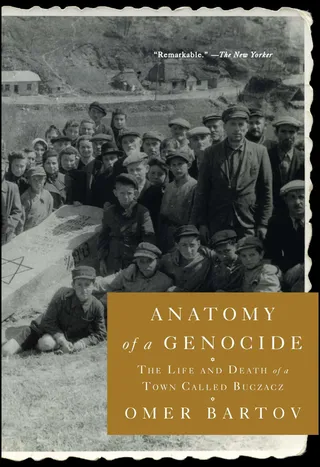
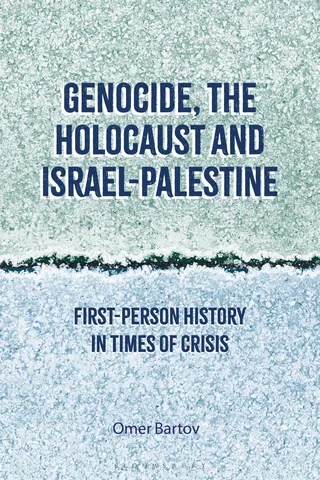
Omer Bartov is the Dean’s Professor of Holocaust and Genocide Studies at Brown University and the author of many books, including Anatomy of a Genocide: The Life and Death of a Town Called Buczacz, which won the National Jewish Book Award; Tales from the Borderlands: Making and Unmaking the Galician Past; and Genocide, the Holocaust and Israel-Palestine: First-Person History in Times of Crisis.
More by Omer Bartov


Why Readwise Books?
Readwise Books is an ebook & audiobook platform that automatically logs how much you and your friends read, making it fun and easy to read more. Learn more →