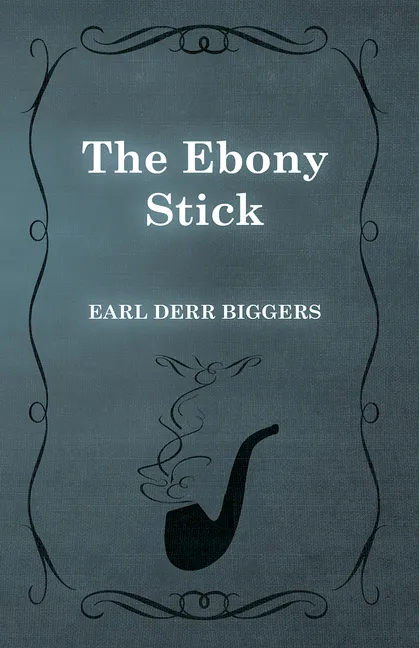
The Ebony Stick
Report an issue
Tell us what's wrong and we'll take a look.
Thanks – we got it. We'll review and follow up if needed.

This early work by Earl Derr Biggers was originally published in 1916 and we are now republishing it with a brand new introductory biography. "The Ebony Stick" is one of Biggers shorter stories, published after his death. Earl Derr Biggers was born on 26th August 1884 in Warren, Ohio, USA. Biggers received his further education at Harvard University, where he developed a reputation as a literary rebel, preferring the popular modern authors, such as Rudyard Kipling and Richard Harding Davis to the established figures of classical literature. While on holiday in Hawaii, Biggers heard tales of a real-life Chinese detective operating in Honolulu, named Chang Apana. This inspired him to create his most enduring legacy in the character of super-sleuth Charlie Chan. The first Chan story "The House Without a Key" (1925) was published as a serialised story in the Saturday Evening Post and then released as a novel in the same year. Biggers went on to write five more Chan novels and all were licensed for movie adaptations by Fox Films. These films were hugely popular with several different actors taking the lead role of Chan. They were even a success in China where the appeal of a character from the country being the hero instead of the villain appealed to film-goers. Eventually; over 40 films were produced featuring the character. Biggers only saw the early on-screen successes of Charlie Chan due to his death at the age of only 48 from a heart attack in April 1933.
Earl Derr Biggers
Earl Derr Biggers (1884-1933) was an American novelist and playwright best known for creating Charlie Chan, one of the most recognizable detectives in twentieth-century popular fiction. Educated at Harvard and active in both fiction and drama, Biggers brought a polished narrative style and strong sense of structure to his mystery writing. The Charlie Chan novels, published between 1925 and 1932, helped establish the character as a lasting presence in detective fiction and popular culture.Biggers' mysteries are remembered for their emphasis on deduction, pacing, and controlled storytelling rather than sensational violence. Charlie Chan's calm intelligence, courtesy, and persistence gave the series a distinctive tone within the broader tradition of Golden Age-style crime fiction. Charlie Chan Carries On, published in 1930, stands as the fifth book in that sequence and reflects the series at a moment of widening ambition.
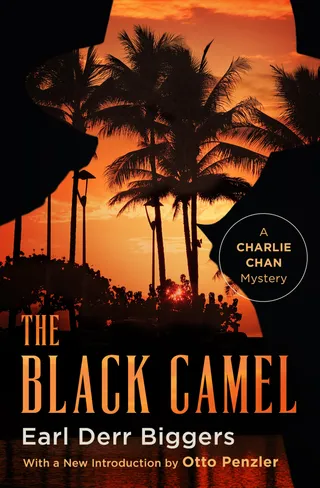
More by Earl Derr Biggers








Why Readwise Books?
Readwise Books is an ebook & audiobook platform that automatically logs how much you and your friends read, making it fun and easy to read more. Learn more →