Report an issue
Tell us what's wrong and we'll take a look.
Thanks – we got it. We'll review and follow up if needed.
'I have put all my genius into my life; I have put only my talent into my works.'-Oscar Wilde.
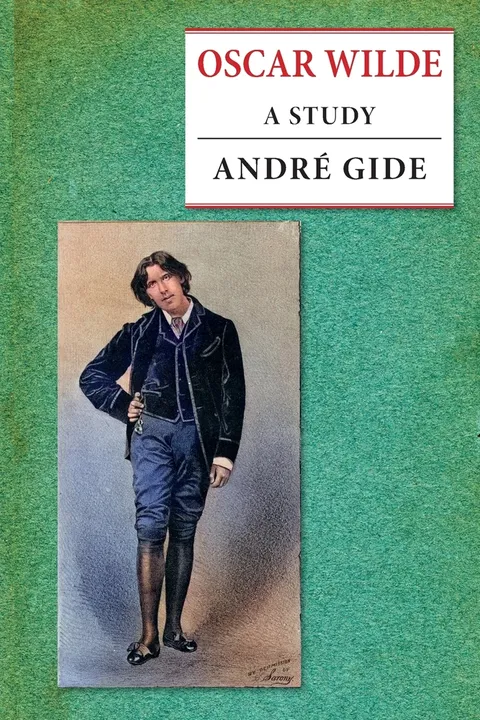
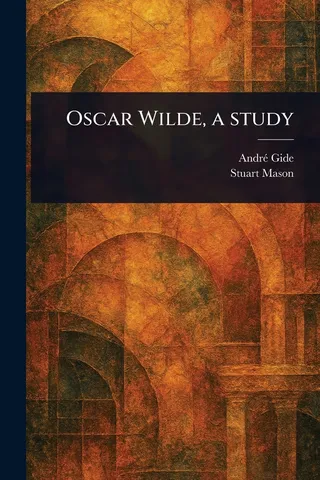
André Gide first met Wilde in Paris when Wilde had fled Britain following his release from Reading gaol. This short book was first published in English in 1905 and was written shortly after Oscar Wilde's death in 1900.
Through personal recollections, Gide states that he set out to show Wilde as an object of admiration and then demonstrate how his work was illuminated by his personality.
André Gide (1869-1951) was the winner of the Nobel Prize for Literature in 1948. His works included many books of fiction as well as autobiographies. He was sexually attracted to boys, describing himself as a pederast. In his Si le Grain Ne Meurt (1924), Gide claims that in 1895 Wilde had 'inveigled him [Gide] into debauchery' with a young Arab boy in Algiers: this was not the case as Gide had already 'discovered his homosexuality' some years earlier.
Stuart Mason (the nom de plume of Christopher Sclater Millard, 1872-1927) translated the book from the original French magazine article and added an introduction, notes and a bibliography. It was Mason's bibliography, listing all of Wilde's works that helped Wilde's literary executor, Robbie Ross, establish copyright on his works. Millard, like Wilde, was imprisoned for his homosexuality.
The book includes the five images from the original publication; three of which are of Oscar Wilde.
André Gide
André Gide (1869–1951), winner of the 1947 Nobel Prize for Literature, was a celebrated novelist, dramatist, and essayist whose narrative works dealt frankly with homosexuality and the struggle between artistic discipline, moralism, and sensual indulgence. Born in Paris, Gide became an influential intellectual figure in nineteenth- and twentieth-century French literature and culture. His essay collections Autumn Leaves and Oscar Wilde, among others, contributed to the public’s understanding of key figures of the day. He traveled widely and advocated for the rights of prisoners, denounced the conditions in the African colonies, and became a voice for, and then against, communism. Other notable works include The Notebooks of André Walter (1891), Corydon (1924), If It Die (1924), The Counterfeiters, and his journals, Journal 1889–1939, Journal 1939–1942, and Journal 1942–1949.
More by André Gide









Why Readwise Books?
Readwise Books is an ebook & audiobook platform that automatically logs how much you and your friends read, making it fun and easy to read more. Learn more →