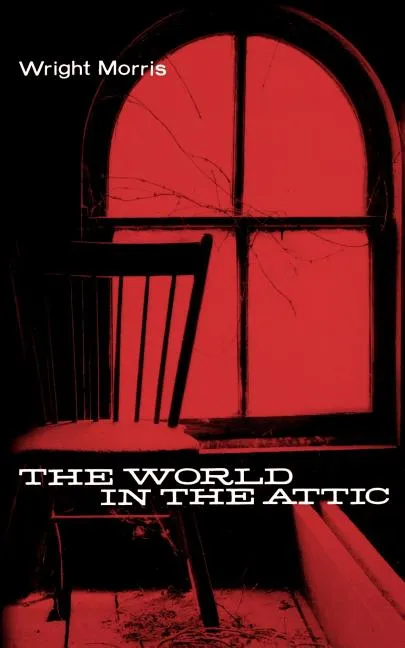
The World in the Attic
Report an issue
Tell us what's wrong and we'll take a look.
Thanks – we got it. We'll review and follow up if needed.
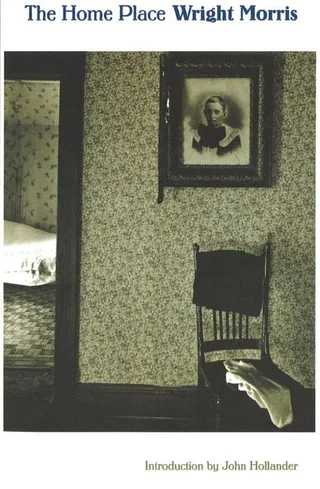
Wright Morris's "Nebraska Trilogy" (1946-49) embodies his attempt to capture and come to terms with his past. According to David Madden, in his study Wright Morris, "In The Inhabitants [a picture collection] the emphasis is on the artifacts inhabited and on the land; in The Home Place [narrative and pictures], on the inhabitants themselves; and in The World in the Attic, on what the land and the people signify to one man, Clyde Muncy, writer and self-exiled Nebraskan. . . . What was only suggested to Muncy in The Home Place is further developed, although not entirely resolved, in The World in the Attic. . . . [In it], Morris achieves the kind of objective conceptualization that is characteristic of his best novels. The first half of the book is impressionistic, a series of reminiscences like The Home Place; but the second half has a novelist narrative line. In The Home Place, the past, saturated in the immediate present, is merely alluded to. In The World in the Attic, however, the past is specifically and dramatically related to the present."


Why Readwise Books?
Readwise Books is an ebook & audiobook platform that automatically logs how much you and your friends read, making it fun and easy to read more. Learn more →