Sustaining River Ecosystems and Water Resources
Report an issue
Tell us what's wrong and we'll take a look.
Thanks – we got it. We'll review and follow up if needed.
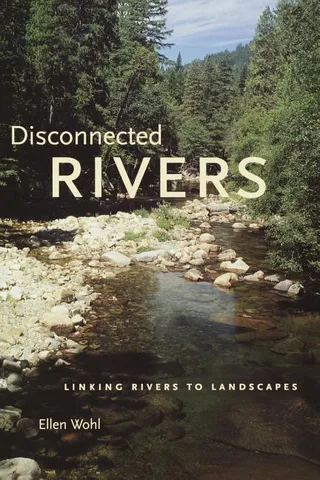
This work is designed to broaden the scope with which many people regard a river. Rivers are commonly regarded from a very simplistic perspective as conduits for downstream flows of water. In this context, it may be considered acceptable and necessary to engineer the channel to either facilitate such flows (e.g., channelization, levees) or limit flows and store water (e.g., water supply reservoirs, flood control). The book presents the concept of a river as a spatially and temporally complex ecosystem that is likely to be disrupted in unexpected and damaging ways by direct river engineering and by human activities throughout a drainage basin.
Viewing a river as a complex ecosystem with nonlinear responses to human activities will help to promote a more nuanced and effective approach to managing river ecosystems and to sustaining the water resources that derive from rivers. In this context, water resources refers to ecosystem services including water supply, water quality, flood control, erosion control, and riverine biota (e.g., freshwater fisheries). Chapters in this book draw extensively on existing literature but integrate this literature from a fresh perspective. General principles are expanded upon and illustrated with photographs, line drawings, tables, and brief, site-specific case studies from rivers around the world.


Why Readwise Books?
Readwise Books is an ebook & audiobook platform that automatically logs how much you and your friends read, making it fun and easy to read more. Learn more →