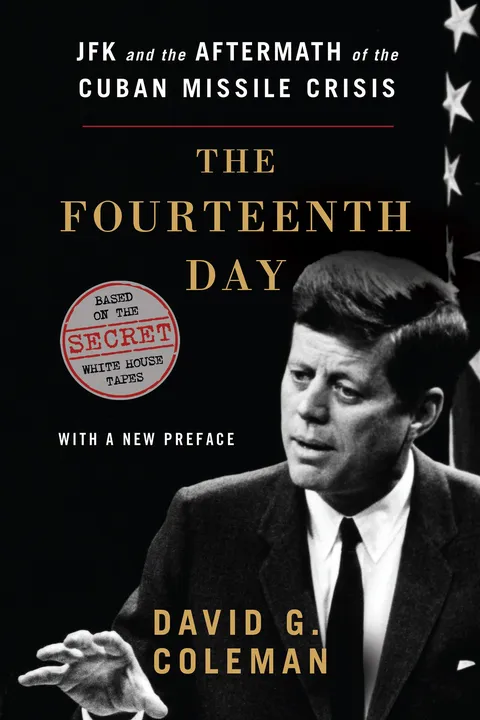
The Fourteenth Day
JFK and the Aftermath of the Cuban Missile Crisis: Based on the Secret White House Tapes
Report an issue
Tell us what's wrong and we'll take a look.
Thanks – we got it. We'll review and follow up if needed.
"A portrait of the JFK White House after the Cuban Missile Crisis as it really was…human and revealing." —Evan Thomas
Popular history marks October 28, 1962, as the end of the Cuban Missile Crisis. Yet as JFK’s secretly recorded White House tapes reveal, the aftermath of the crisis was a political and diplomatic minefield. The president had to push hard to get Khrushchev to remove Soviet weaponry from Cuba without reigniting the volatile situation, while also tackling midterm elections and press controversy. With a new preface that highlights recently declassified information, historian David G. Coleman puts readers in the Oval Office during the turning point of Kennedy’s presidency and the watershed of the Cold War.
David Coleman
The director of the Miller Center’s Presidential Recordings Program, David G. Coleman is a history professor at the University of Virginia. He lives in Arlington.
More by David Coleman









Why Readwise Books?
Readwise Books is an ebook & audiobook platform that automatically logs how much you and your friends read, making it fun and easy to read more. Learn more →