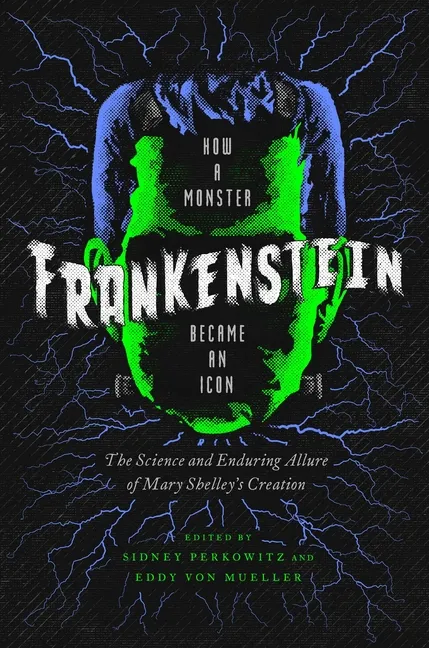
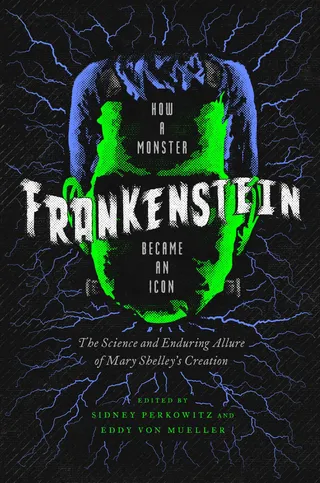
Frankenstein
How a Monster Became an Icon: The Science and Enduring Allure of Mary Shelley's Creation
Report an issue
Tell us what's wrong and we'll take a look.
Thanks – we got it. We'll review and follow up if needed.
The tale of a tormented creature created in a laboratory began on a rainy night in 1816 in the imagination of a nineteen-year-old Mary Wollstonecraft Shelley, newly married to the celebrated Romantic poet Percy Shelley. Since its publication two years later, in 1818, Frankenstein: Or, the Modern Prometheus has spread around the globe through every possible medium and variation. Frankenstein has not been out of print once in 200 years. It has appeared in hundreds of editions, perhaps more than any other novel. It has inspired a multitude of stage and screen adaptations, the latest appearing just last year. "Frankenstein" has become an indelible part of popular culture, and is shorthand for anything bizarre and human-made; for instance, genetically modified crops are "Frankenfood."
Conversely, Frankenstein's monster has also become a benign Halloween favorite. Yet for all its long history, Frankenstein's central premise--that science, not magic or God, can create a living being, and thus these creators must answer for their actions as humans, not Gods--is most relevant today as scientists approach creating synthetic life.
In its popular and cultural weight and its expression of the ethical issues raised by the advance of science, physicist Sidney Perkowitz and film expert Eddy von Muller have brought together scholars and scientists, artists and directions--including Mel Brooks--to celebrate and examine Mary Shelley's marvelous creation and its legacy as the monster moves into his next century.
Sidney Perkowitz
Sidney Perkowitz is Charles Howard Candler Professor of Physics at Emory University, during which time he has produced over 100 research papers and books with funding from the US government, industry, and foundations. Now, as Professor Emeritus, he presents science for non-scientists, and is the author of several books, including Universal Foam: From Cappuccino to the Cosmos, and Frankenstein: How a Monster Became an Icon, the Science and Enduring Allure of Mary Shelley's Creation. He has written articles for publications including the Washington Post, New Scientist, and the Los Angeles Review of Books, and has appeared on outlets including CNN, NPR, and the BBC. He is a Fellow of the American Association for the Advancement of Science and, in 2015, received a Lifetime Achievement Award from the Society for Literature, Science, and the Arts.
More by Sidney Perkowitz




Why Readwise Books?
Readwise Books is an ebook & audiobook platform that automatically logs how much you and your friends read, making it fun and easy to read more. Learn more →