Report an issue
Tell us what's wrong and we'll take a look.
Thanks – we got it. We'll review and follow up if needed.
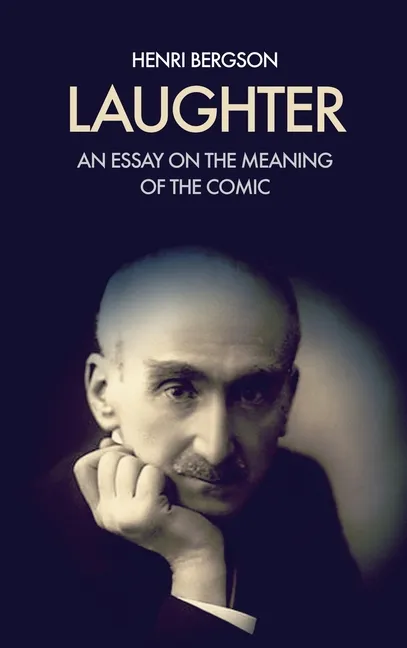
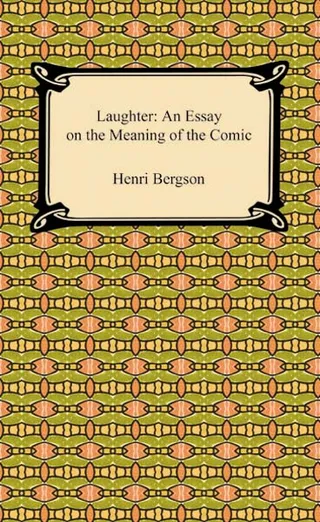
What does laughter mean? What is the basal element in the laughable? What common ground can we find between the grimace of a merry-andrew, a play upon words, an equivocal situation in a burlesque and a scene of high comedy?
The essay on Laughter originally appeared in a series of three articles in one of the leading magazines in France, the Revue de Paris. The book has been highly successful in France. It has been translated into Russian, Polish, and Swedish. German and Hungarian translations are under preparation. Its success is due partly to the novelty of the explanation offered of the comic, and partly also to the fact that the author incidentally discusses questions of still greater interest and importance. Thus, one of the best known and most frequently quoted passages of the book is that portion of the last chapter in which the author outlines a general theory of art.
Henri Bergson
Henri-Louis Bergson (18 October 1859–4 January 1941) was a French philosopher influential in the first half of the 20th century. He believed that for a true understanding of reality the processes of immediate experience combined with intuition play a larger role than rationalism and science. In 1927 he received the Nobel Prize in Literature “in recognition of his rich and vitalizing ideas and the brilliant skill with which they have been presented”. In 1930, he received France’s highest honor: the Grand-Croix de la Legion d’honneur.
More by Henri Bergson




Why Readwise Books?
Readwise Books is an ebook & audiobook platform that automatically logs how much you and your friends read, making it fun and easy to read more. Learn more →