
Dreams
Report an issue
Tell us what's wrong and we'll take a look.
Thanks – we got it. We'll review and follow up if needed.
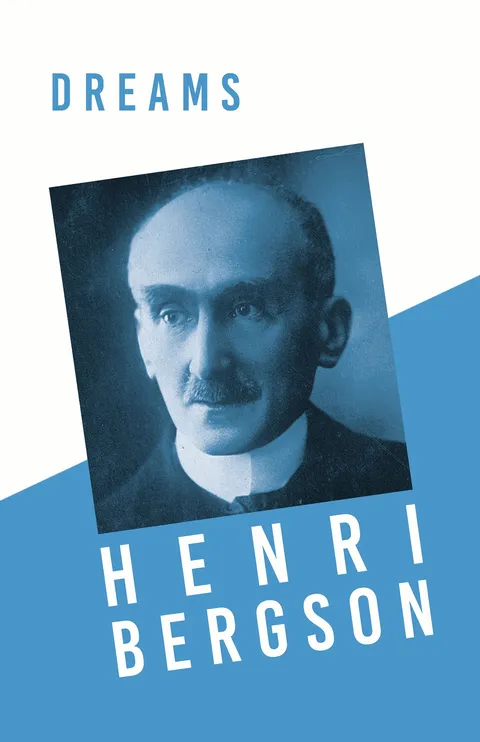

Henri Bergson's life was an illustrious one - the French philosopher won the Nobel Prize for Literature and the Legion of Honor, among other accolades, over his 81 years. A household name during his lifetime, Bergson has since become less well-known than some of his contemporaries and successors in France's philosophical landscape. However, his ideas still provoke interest and intrigue in readers across academic circles and beyond.
Dreams contains some of his most oft-debated ideas and expands upon an area of philosophical and psychological study that had gained great traction in the early 20th century. He adopts what appears to be a scientific approach, discussing the seeds of dream and memory that exist in the subconscious mind and describing the sensory stimuli that give this dream and memory substance. The borders of neuroscience and the philosophy of meaning become a little muddied over the course of Bergson's essay - perhaps fueling some of the debate and dissent around his view - but this does not detract from Dreams as an excellent exploration of one of the most innovative minds of the 19th and 20th centuries.
Henri Bergson
Henri-Louis Bergson (18 October 1859–4 January 1941) was a French philosopher influential in the first half of the 20th century. He believed that for a true understanding of reality the processes of immediate experience combined with intuition play a larger role than rationalism and science. In 1927 he received the Nobel Prize in Literature “in recognition of his rich and vitalizing ideas and the brilliant skill with which they have been presented”. In 1930, he received France’s highest honor: the Grand-Croix de la Legion d’honneur.
More by Henri Bergson








Why Readwise Books?
Readwise Books is an ebook & audiobook platform that automatically logs how much you and your friends read, making it fun and easy to read more. Learn more →