A Doll's House
Report an issue
Tell us what's wrong and we'll take a look.
Thanks – we got it. We'll review and follow up if needed.

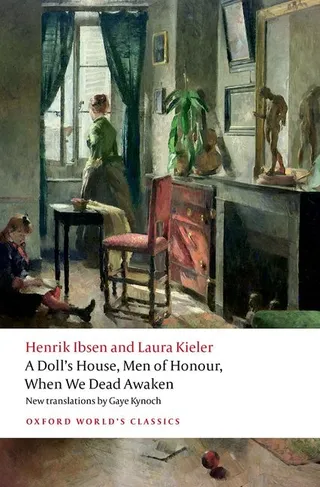
A Doll's House (Norwegian: Et dukkehjem; also translated as A Doll House) is a three-act play in prose by Henrik Ibsen. It premiered at the Royal Theatre in Copenhagen, Denmark, on 21 December 1879, having been published earlier that month. The play is significant for its critical attitude toward 19th century marriage norms. It aroused great controversy at the time, as it concludes with the protagonist, Nora, leaving her husband and children because she wants to discover herself. Ibsen was inspired by the belief that "a woman cannot be herself in modern society," since it is "an exclusively male society, with laws made by men and with prosecutors and judges who assess feminine conduct from a masculine standpoint." Its ideas can also be seen as having a wider application: Michael Meyer argued that the play's theme is not women's rights, but rather "the need of every individual to find out the kind of person he or she really is and to strive to become that person." In a speech given to the Norwegian Association for Women's Rights in 1898, Ibsen insisted that he "must disclaim the honor of having consciously worked for the women's rights movement," since he wrote "without any conscious thought of making propaganda," his task having been "the description of humanity."
Henrik Ibsen
Henrik Ibsen was a Norwegian playwright and theatre director, widely regarded as a founder of modern drama. Born in 1828 in Skien, Norway, he faced early financial hardship and spent many years in self-imposed exile. His philosophy centered on individual freedom, truth, and the courage to challenge social conventions.Ibsen's works focus on realism and the moral conflicts within ordinary lives. In plays such as A Doll's House, Ghosts, and An Enemy of the People, he explored themes of identity, societal pressure, and personal responsibility. His writing often exposed hypocrisy and encouraged individuals to confront uncomfortable truths.His influence reshaped modern theatre and established new standards for dramatic realism. Ibsen's plays sparked controversy in their time but helped open discussions on gender roles, morality, and social reform. Today, he is considered one of the most important playwrights in history, and his works continue to be performed worldwide.
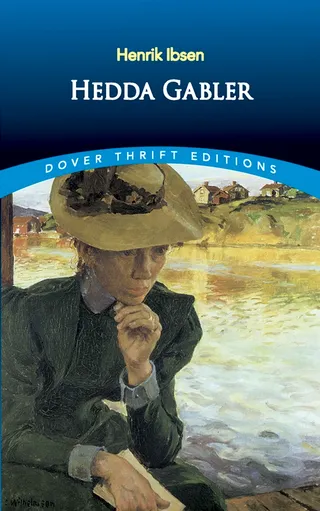
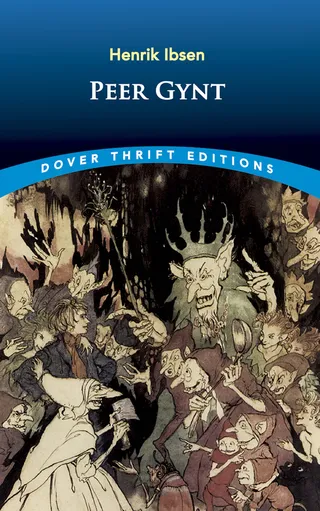
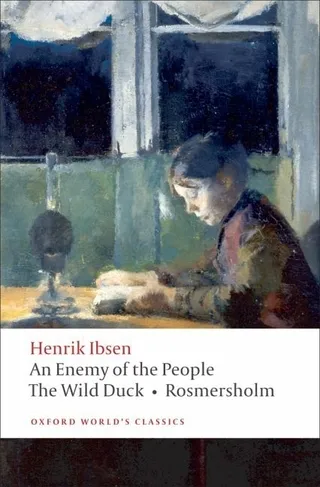
More by Henrik Ibsen





Why Readwise Books?
Readwise Books is an ebook & audiobook platform that automatically logs how much you and your friends read, making it fun and easy to read more. Learn more →