Report an issue
Tell us what's wrong and we'll take a look.
Thanks – we got it. We'll review and follow up if needed.
Smith was educated at the Boys' Latin School of Maryland and from there he built a very successful career as author, painter and engineer.
Initially he became a contractor in New York City and worked mainly for the federal government, helping to build the stone ice-breaker at Bridgeport, Connecticut, the jetties at the mouth of the Connecticut River, the foundation for the Statue of Liberty in New York Harbor, and many other works.
Smith liked to travel both within the US and abroad: to Cuba, Mexico, Venice, Constantinople, Spain and the Netherlands. On these trips he sketched and painted much of what he saw. His paintings of these times still command good prices at auctions.
As a writer his initial focus was on travelogues before branching out into short stories and novels.
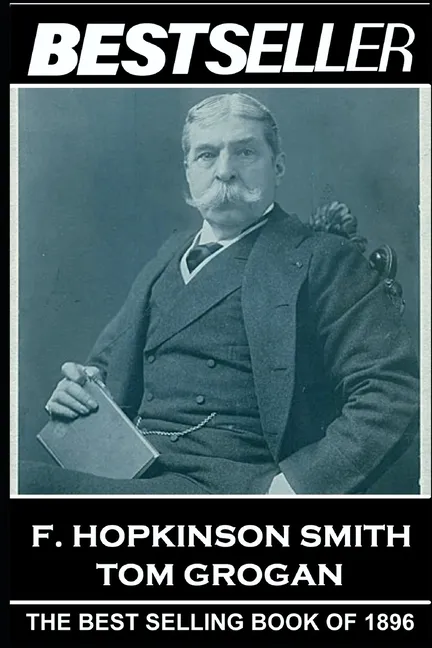
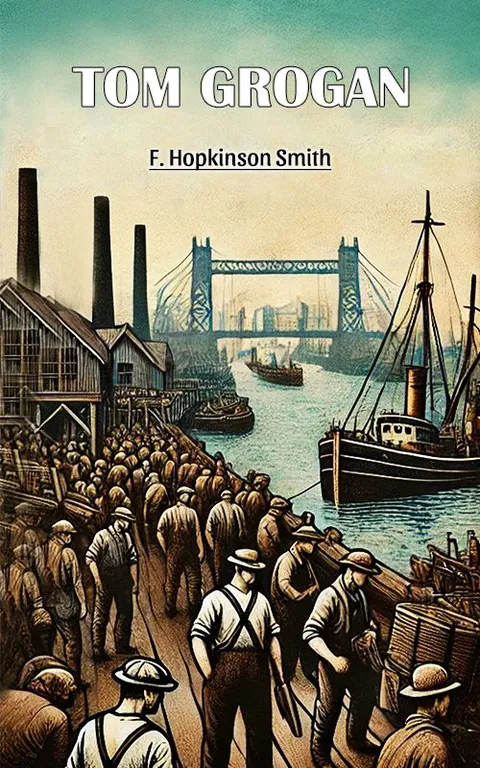
And it was as a novelist that he created two sensational books, each becoming the best-selling work of fiction in their year of publication: 'Tom Grogan' (1896) and 'Caleb West' (1898)
Francis Hopkinson Smith died at the age of 76 on April 7th, 1915.
F Hopkinson Smith
Francis Hopkinson Smith was an American writer, artist, and engineer. He laid the groundwork for the Statue of Liberty, penned numerous novels, and garnered accolades for his paintings. F. Hopkinson Smith was the great uncle of G. E. Kidder Smith, an American architect, novelist, and photographer who lived from 1913 to 1997. Smith was born in Baltimore, Maryland on October 23, 1838, as a descendant of Francis Hopkinson, a signer of the Declaration of Independence. He graduated from the Boys' Latin School in Maryland. His first popular work was Col. Carter of Cartersville (1891). His novels Tom Grogan (1896) and Caleb West (1898) were the best-selling books in the United States in their respective years of release. On March 1, 1915, Smith notified the Carmel Arts and Crafts Club in Carmel-by-the-Sea, California, that his collection of fifteen original paintings had been shipped for an exhibition at the Club from June 8 to June 26, 1915. It was his first trip out West. On April 7, 1915, he died in his New York City residence.
More by F Hopkinson Smith


Why Readwise Books?
Readwise Books is an ebook & audiobook platform that automatically logs how much you and your friends read, making it fun and easy to read more. Learn more →