Journalism For Women
With an Essay From Arnold Bennett By F. J. Harvey Darton
Report an issue
Tell us what's wrong and we'll take a look.
Thanks – we got it. We'll review and follow up if needed.
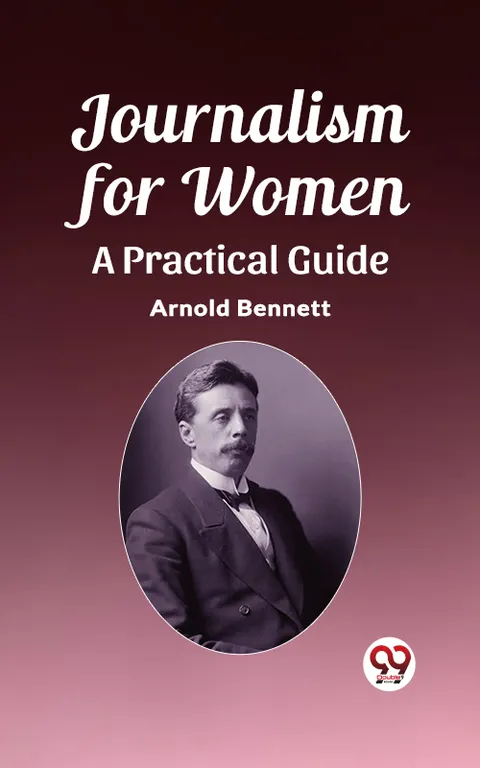
First published in 1898, "Journalism For Women" is a guide to becoming a good journalist originally designed for women and written by Arnold Bennett. Within it, Bennet outlines various lines of study and training recommended for journalists new and old, offering tips on such subjects as first steps, style, types of newspaper, working with colleagues, and much more. Contents include: "Imperfections of the Existing Woman-journalist", "The Road Towards Journalism", "The Aspirant", "Style", "The Outside Contributor", "The Search for Copy", "The Art of Corresponding with an Editor", "Notes on the Leading Types of Papers", etc. Enoch Arnold Bennett (1867-1931) was an English writer. Although he is perhaps best remembered for his popular novels, Bennett also produced work in other areas including the theatre, propaganda, journalism, and film. Other notable works by this author include: "Helen with a High Hand" (1910), "The Card" (1911), and "Hilda Lessways" (1911). Many vintage books such as this are becoming increasingly scarce and expensive. It is with this in mind that we are republishing this volume now in an affordable, modern, high-quality edition complete with an introductory essay by F. J. Harvey Darton.
Arnold Bennett
Enoch Arnold Bennett was born on May 27, 1867, in Hanley, Stoke-on-Trent, to parents Enoch Bennett and Sarah Ann Longson. Although initially steered toward a legal career, he found his true vocation in writing. After moving to London, he became a journalist and later a full-time writer, producing novels, short stories, plays, and essays. Bennett's works often focused on the lives of ordinary people in industrial England, particularly in the area known as the Five Towns, which he depicted with vivid realism. His attention to the nuances of class, ambition, and provincial life gained him widespread popularity and critical attention. Some of his most notable works include The Old Wives Tale, Clayhanger, and The Card. Beyond fiction, he was also known for keeping a detailed daily journal and writing essays on self-improvement and literary craft. His experiences in Paris and London enriched his worldview, which he expressed through his cosmopolitan characters and practical philosophical outlook. Bennett s influence extended into public life, and during World War I he worked for the British Ministry of Information. He died in London on March 27, 1931, leaving behind a significant literary legacy and a deeply personal record of early 20th-century English society.
More by Arnold Bennett








Why Readwise Books?
Readwise Books is an ebook & audiobook platform that automatically logs how much you and your friends read, making it fun and easy to read more. Learn more →