Report an issue
Tell us what's wrong and we'll take a look.
Thanks – we got it. We'll review and follow up if needed.
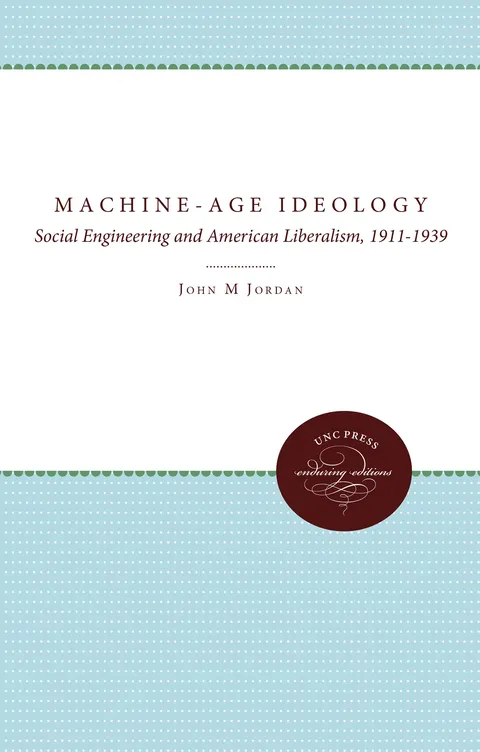
In this interdisciplinary work, John Jordan traces the significant influence on American politics of a most unlikely hero: the professional engineer. Jordan shows how technical triumphs — bridges, radio broadcasting, airplanes, automobiles, skyscrapers, and electrical power — inspired social and political reformers to borrow the language and logic of engineering in the early twentieth century, bringing terms like efficiency, technocracy, and social engineering into the political lexicon. Demonstrating that the cultural impact of technology spread far beyond the factory and laboratory, Jordan shows how a panoply of reformers embraced the language of machinery and engineering as metaphors for modern statecraft and social progress. President Herbert Hoover, himself an engineer, became the most powerful of the technocratic progressives. Elsewhere, this vision of social engineering was debated by academics, philanthropists, and commentators of the day — including John Dewey, Thorstein Veblen, Lewis Mumford, Walter Lippmann, and Charles Beard. The result, Jordan argues, was a new way of talking about the state.
Originally published in 1994.
A UNC Press Enduring Edition — UNC Press Enduring Editions use the latest in digital technology to make available again books from our distinguished backlist that were previously out of print. These editions are published unaltered from the original, and are presented in affordable paperback formats, bringing readers both historical and cultural value.
John M. Jordan
John M. Jordan teaches Writing About History at Harvard University.
More by John M. Jordan






Why Readwise Books?
Readwise Books is an ebook & audiobook platform that automatically logs how much you and your friends read, making it fun and easy to read more. Learn more →