Report an issue
Tell us what's wrong and we'll take a look.
Thanks – we got it. We'll review and follow up if needed.
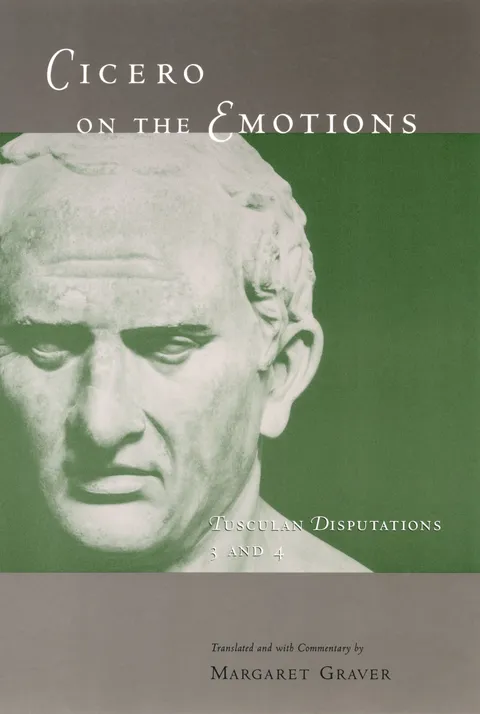
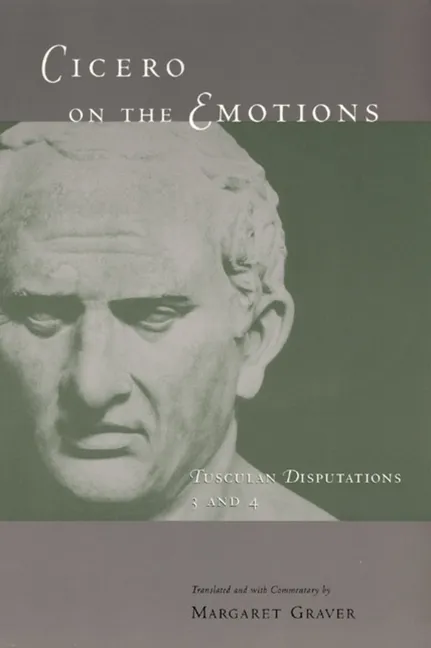
Margaret Graver's elegant and idiomatic translation makes Cicero's work accessible not just to classicists but to anyone interested in ancient philosophy and psychotherapy or in the philosophy of emotion. The accompanying commentary explains the philosophical concepts discussed in the text and supplies many helpful parallels from Greek sources.
Marcus Tullius Cicero
Marcus Tullius Cicero (106-43 BC), commonly known as Cicero, was a Roman statesman, philosopher, orator, and lawyer. Born into an aristocratic family, he studied law and served a term as consul in 63 BC. As a member of the Senate, he witnessed the rise to prominence of Julius Caesar, whose followers forced him into exile and out of politics. Following the assassination of Caesar in 44 BC, to which he was a witness, he argued in front of the Senate for the restoration of the republic, but was unsuccessful. In 43 BC, he was murdered on the orders of Mark Antony. Cicero's works include philosophic writings, speeches made as a lawyer and a senator, and letters. His best-known writings include On the Orator, On the Republic, Hortensius, On the Nature of the Gods, On Duties, and Treatises on Friendship and Old Age.
More by Marcus Tullius Cicero





Margaret Graver
Translated by
Margaret Graver is the Aaron Lawrence Professor in Classics at Dartmouth College. Her publications include Cicero on the Emotions: Tusculan Disputations 3 and 4; Stoicism and Emotion; and, in collaboration with A.A. Long, a complete translation of Seneca's Letters on Ethics.


Why Readwise Books?
Readwise Books is an ebook & audiobook platform that automatically logs how much you and your friends read, making it fun and easy to read more. Learn more →