Creating a Learning Society
A New Approach to Growth, Development, and Social Progress
Report an issue
Tell us what's wrong and we'll take a look.
Thanks – we got it. We'll review and follow up if needed.
It has long been recognized that an improved standard of living results from advances in technology, not from the accumulation of capital. It has also become clear that what truly separates developed from less-developed countries is not just a gap in resources or output but a gap in knowledge. In fact, the pace at which developing countries grow is largely a function of the pace at which they close that gap.
Thus, to understand how countries grow and develop, it is essential to know how they learn and become more productive and what government can do to promote learning. In Creating a Learning Society, Joseph E. Stiglitz and Bruce C. Greenwald cast light on the significance of this insight for economic theory and policy. Taking as a starting point Kenneth J. Arrow's 1962 paper "Learning by Doing," they explain why the production of knowledge differs from that of other goods and why market economies alone typically do not produce and transmit knowledge efficiently. Closing knowledge gaps and helping laggards learn are central to growth and development. But creating a learning society is equally crucial if we are to sustain improved living standards in advanced countries.
Combining accessible prose with technical economic analysis, Stiglitz and Greenwald provide new models of "endogenous growth," up-ending thowhe thinking about both domestic and global policy and trade regimes. They show well-designed government trade and industrial policies can help create a learning society, and how poorly designed intellectual property regimes can retard learning. They also explain how virtually every government policy has effects, both positive and negative, on learning, a fact that policymakers must recognize. They demonstrate why many standard policy prescriptions, especially those associated with "neoliberal" doctrines focusing on static resource allocations, have impeded learning. Among the provocative implications are that free trade may lead to stagnation whereas broad-based industrial protection and exchange rate interventions may bring benefits--not just to the industrial sector, but to the entire economy.
The volume concludes with brief commentaries from Philippe Aghion and Michael Woodford, as well as from Nobel Laureates Kenneth J. Arrow and Robert M. Solow.
Joseph E Stiglitz
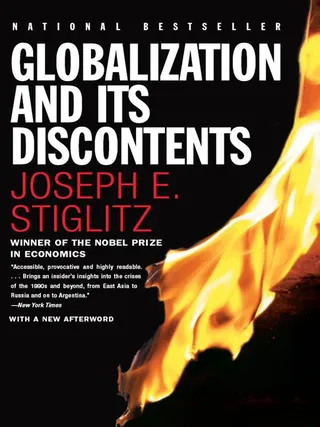
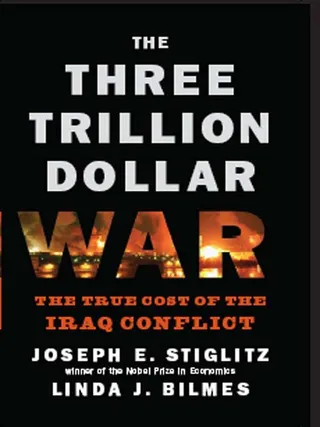
Joseph E. Stiglitz is a professor of economics at Columbia University and the recipient of a John Bates Clark Medal and a Nobel Prize. He is also the former senior vice president and chief economist of the World Bank. His books include Globalization and Its Discontents, The Three Trillion Dollar War, and Making Globalization Work. He lives in New York City.
More by Joseph E Stiglitz
Bruce Greenwald
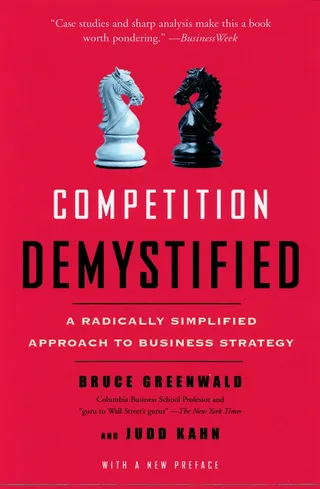
Bruce C. Greenwald was founding director of the Heillbrunn Center for Graham and Dodd Investing at Columbia Business School from 2001 until his retirement in 2019. In addition to training thousands of students in the mysteries of value investing, he taught oversubscribed courses on the economics of business strategy and globalization. His book Competition Demystified, published in 2005, is still in print. He has also been chairman of Paradigm Capital Management since its founding in 2007 and the director of research at First Eagle Funds from 2007-11, serving as a senior advisor since.
More by Bruce Greenwald
Philippe Aghion
Philippe Aghion is professor at the College de France, INSEAD, and the London School of Economics and was previously professor of economics at Harvard. He is coauthor, with Peter Howitt, of Endogenous Growth Theory and The Economics of Growth.
Kenneth Arrow
Kenneth Arrow is the Joan Kenney Professor of Economics and Professor of Operations Research, emeritus; a CHP/PCOR fellow; and an FSI senior fellow by courtesy. He is the joint winner of the Nobel Memorial Prize in Economics with John Hicks in 1972. To date, he is the youngest person to have received this award, at 51. In economics, he is a figure in post-World War II neo-classical economic theory. Many of his former graduate students have gone on to win the Nobel Memorial Prize themselves. His most significant works are his contributions to social choice theory, notably "Arrow's impossibility theorem", and his work on general equilibrium analysis. He has also provided foundational work in many other areas of economics, including endogenous growth theory and the economics of information. He has been co-editor of the Handbooks in Economics series since the mid-1980s.


Why Readwise Books?
Readwise Books is an ebook & audiobook platform that automatically logs how much you and your friends read, making it fun and easy to read more. Learn more →