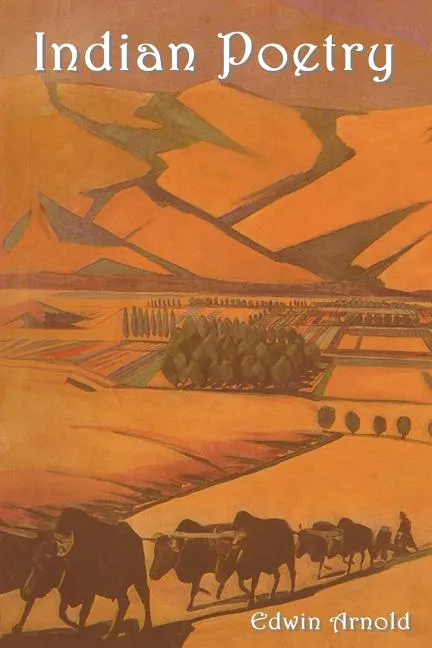
Indian Poetry Containing
The Indian Song of Songs, from the Sanskrit of the G Ta Govinda of Jayadeva, Two Books from the Iliad of India (Mah
Report an issue
Tell us what's wrong and we'll take a look.
Thanks – we got it. We'll review and follow up if needed.
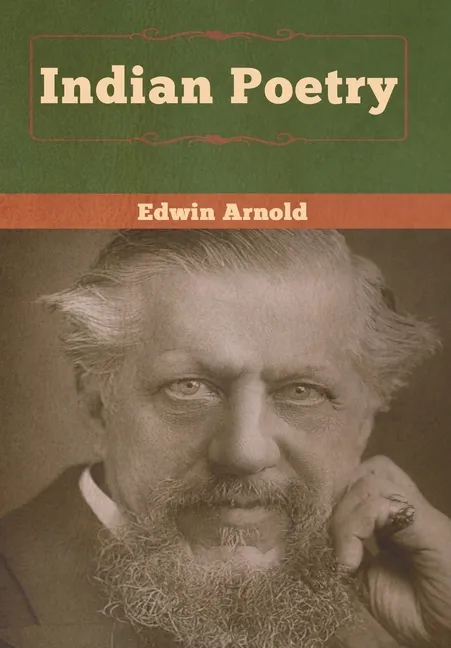
CONTENTS: The Indian Song of Songs-Hymn to Vishnu; Sarga the First-The Sports of Krishna; Sarga the Second-The Penitence of Krishna; Sarga the Third-Krishna troubled; Sarga the Fourth-Krishna cheered; Sarga the Fifth-The Longings of Krishna; Sarga the Sixth-Krishna made bolder; Sarga the Seventh-Krishna supposed false; Sarga the Eighth-The Rebuking of Krishna; Sarga the Ninth-The End of Krishna's Trial; Sarga the Tenth-Krishna in Paradise; Sarga the Eleventh-The Union of Radha and Krishna, Miscellaneous Oriental Poems-; The Rajpoot Wife; King Saladin; The Caliph's Draught; Hindoo Funeral Song; Song of the Serpent Charmers; Song of the Flour-Mill; Taza ba Taza; The Mussulman Paradise; Dedication of a Poem from the Sanskrit; The Rajah's Ride; Two Books From the "Iliad of India"; The Great Journey; The Entry into Heaven; The Night of Slaughter; The Morning Prayer; Proverbial Wisdom from the Shlokas of the Hitopadesa
Edwin Arnold
Sir. Edwin Arnold (10 June 1832 - 24 March 1904), was born in the United Kingdom. He was a journalist and poet, most popular as the writer of The Light of Asia (1879), which describes the life and lessons of Buddha. Pearls of the Faith (1883), on Islam, and The Light of the World (1891), on Christianity, got less success. After leaving the University of Oxford, Arnold became a schoolteacher in Birmingham, and later became principal of the British government college in Pune, India. He came back to Britain in 1861 to join the staff of the Daily Telegraph, where he worked as a chief editor from 1873 to 1889. He published various volumes of short poems, as well as translations of the Indian section and a good deal of travel composition. The essays collected in Japonica (1892) were a popular contribution to the late nineteenth-century (cult of Japan) in Britain, similar to his variations of Japanese poetry in The Tenth Muse (1895) and his Japanese play Adzuma (1893). He was knighted in 1888.
More by Edwin Arnold


Why Readwise Books?
Readwise Books is an ebook & audiobook platform that automatically logs how much you and your friends read, making it fun and easy to read more. Learn more →