Report an issue
Tell us what's wrong and we'll take a look.
Thanks – we got it. We'll review and follow up if needed.


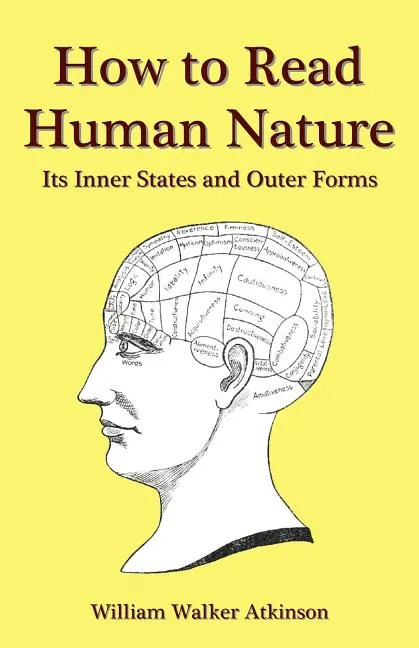
Human Nature is a term most frequently used and yet little understood. The average person knows in a general way what is meant by it but very few are able to give an off-hand definition of the term or to state what in their opinion constitutes the real essence of the thought expressed by this familiar phrase. Human Nature means the nature of man or mankind. "Nature," in this usage, means: "The natural disposition of mind of any person; temper; personal character; individual constitution; the peculiar mental characteristics and attributes which serve to distinguish one person from another." Thus we see that the essence of the nature of mankind, or of a particular human being, is the mind, the mental qualities, characteristics, properties and attributes. Human Nature is then a phase of psychology and subject to the laws, principles and methods of study, examination and consideration of that particular branch of science. Human Nature expresses itself in two general phases: the phase of Inner States; and the phase of Outer Forms. These two phases, however, are not separate or opposed to each other, but are complementary aspects of the same thing. There is always an action and reaction between the Inner State and the Outer Form-between the Inner Feeling and the Outer Expression. If we know the particular Inner State we may infer the appropriate Outer Form; and if we know the Outer Form we may infer the Inner State. These two elements or phases, in their constant action and reaction, manifest the phenomena of Human Nature, and a knowledge of each, and both give to us the key which will open for us the door of the understanding of Human Nature. This is what this book is concerned with teaching you. The ability to read Human Nature puts you in a position of power.
William Walker Atkinson
William Walker Atkinson, born in 1862, was an influential American author and philosopher known for his extensive writings on yoga, mysticism, and Eastern philosophy. He is the author of the pseudonymous works attributed to Theron Q. Dumont and Yogi Ramacharaka. A prominent figure in the New Thought movement, Atkinson authored numerous works exploring the principles of spiritual growth and self-realization. His writings often focus on practical applications of Eastern spiritual practices, particularly in the context of Western thought. Atkinson's most notable works include - A Series of Lessons in Gnani Yoga: The Yoga of Wisdom, where he delves into the philosophy of Gnani Yoga, emphasizing self-awareness, consciousness, and personal development. His approach combines insights from Indian spirituality with Western understanding, aiming to provide readers with tools for achieving enlightenment and inner peace. In addition to his work on yoga, Atkinson wrote extensively on subjects like mental science, self-help, and occultism. His contributions to spiritual literature have influenced many seeking to integrate Eastern philosophies into their lives. Atkinson's legacy endures through his writings, which continue to inspire those on a journey toward self-discovery and spiritual fulfillment.
More by William Walker Atkinson







Why Readwise Books?
Readwise Books is an ebook & audiobook platform that automatically logs how much you and your friends read, making it fun and easy to read more. Learn more →