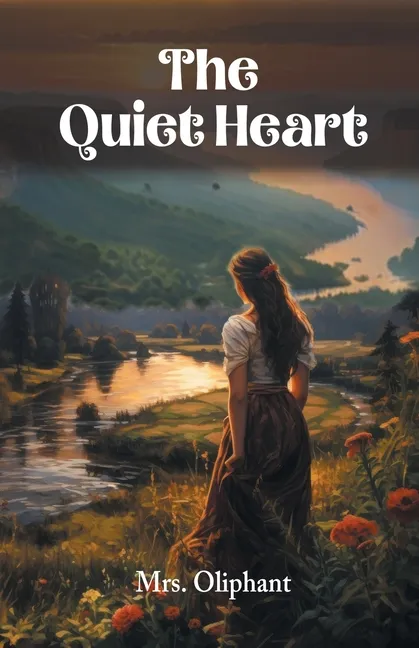
The Quiet Heart
Report an issue
Tell us what's wrong and we'll take a look.
Thanks – we got it. We'll review and follow up if needed.
The Quiet Heart by Mrs. Oliphant is a Victorian-era novel that intricately weaves themes of love, loss, and personal growth against a backdrop of family dynamics and social norms. The story centers on the life of Isabel Dysart, a young woman whose journey through tragedy and emotional turmoil leads her towards inner strength and redemption. Isabel's life is marked by a profound love that is tragically cut short, resulting in deep personal loss. This heartbreak forces her to confront her own emotional resilience and navigate the complexities of relationships and social expectations. Throughout the novel, Isabel's character evolves, showcasing her ability to grow and find inner peace amidst external conflicts and personal sacrifices. As Isabel interacts with her family and broader social circle, the novel delves into the intricacies of Victorian social norms and the pressures they exert on individual choices and relationships. Themes of forgiveness and redemption are explored as Isabel seeks to reconcile with her past and build a future marked by harmony and balance. Ultimately, The Quiet Heart is a poignant exploration of the human spirit's capacity to find love and contentment despite the trials of life, highlighting the importance of inner strength and emotional resilience in the face of adversity.
Mrs Oliphant
Margaret Oliphant was a Scottish author and historical writer who usually wrote under the name Mrs. Oliphant. She was born Margaret Oliphant Wilson on April 4, 1828, and died on June 20, 1897. She writes "domestic realism, the historical novel, and tales of the supernatural" as her short stories. Margaret Oliphant was born in Wallyford, near Musselburgh, East Lothian. She was the only daughter and youngest child still living of Margaret Oliphant (c. 1789-17 September 1854) and Francis W. Wilson, a clerk. We lived in Lasswade, Glasgow, and Liverpool when she was a child. In Wallyford, a street called Oliphant Gardens is named after her. As a girl, she was always trying new things with writing. Passages in the Life of Mrs. Margaret Maitland, her first book, came out in 1849. This was about the mostly successful Scottish Free Church movement, which was something her folks agreed with. Next came Caleb Field in 1851, the same year she met publisher William Blackwood in Edinburgh and was asked to write for Blackwood's Magazine. She did so for the rest of her life and wrote over 100 articles, including one that criticized Arthur Dimmesdale in Nathaniel Hawthorne's "The Scarlet Letter."
More by Mrs Oliphant







Why Readwise Books?
Readwise Books is an ebook & audiobook platform that automatically logs how much you and your friends read, making it fun and easy to read more. Learn more →