Report an issue
Tell us what's wrong and we'll take a look.
Thanks – we got it. We'll review and follow up if needed.
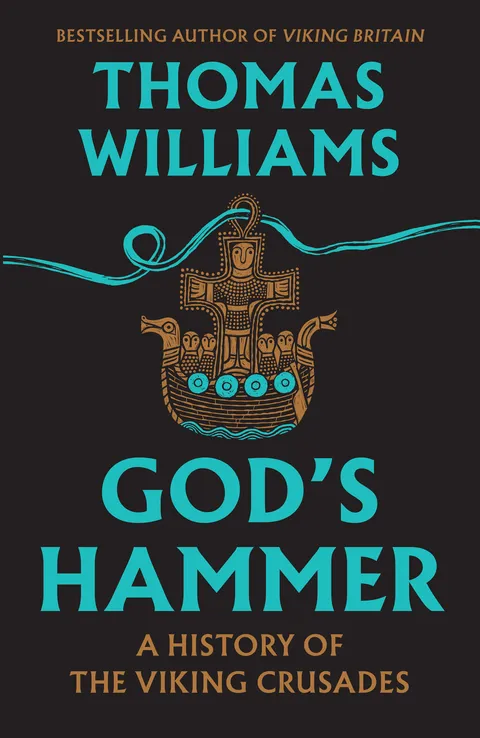
From the bestselling author of Viking Britain, a stunning new perspective on the medieval world.
‘Surprising, original and compelling’ RORY STEWART
When we think of the Crusades, the image is usually squarely medieval: an era of pageantry, knights, castles and cathedrals. An age of violence, certainly, but one glossed with faith, chivalry and Christian derring-do.
When we think of the Vikings, we most often see barbarism and pagan menace: Norse warriors drenched in blood-sacrifice and presided over by grim, brooding gods.
Both images are false, of course, created by centuries of cultural baggage. This book sets that history right, showing how the Vikings and their descendants embraced Christianity and the mores of mainstream Western Christendom – and how that Western medieval world imbibed the values and attitudes of the Vikings’ northern home.
Telling the story of how the Vikings took up arms and the cross, this is a book that leads to extraordinary places: from Jerusalem and Istanbul to Novgorod and Tallinn, via cold northern seas and ice-shrouded northern forests. It tells stories full of adventure, horror and madness, of pilgrimages and war-paths, bodyguards and princes, holy missions and rapacious greed.
That which transformed the bounds of Christendom forever was a hammer forged in the pagan fires of the Viking Age.
Thomas Williams
A historian of the early Middle Ages and a former curator at the British Museum, Thomas Williams worked as project curator for the major international exhibition Vikings: Life and Legend. His doctoral research was undertaken at UCL’s Institute of Archaeology and he has taught at UCL and the University of Cambridge. He is a fellow and trustee of the Society of Antiquaries of London. Favorably reviewed in Britain, his previous books Lost Realms, Viking London, and Viking Britain were not published in America, so God’s Hammer is Thomas’s American debut. He lives in England.
More by Thomas Williams








Why Readwise Books?
Readwise Books is an ebook & audiobook platform that automatically logs how much you and your friends read, making it fun and easy to read more. Learn more →