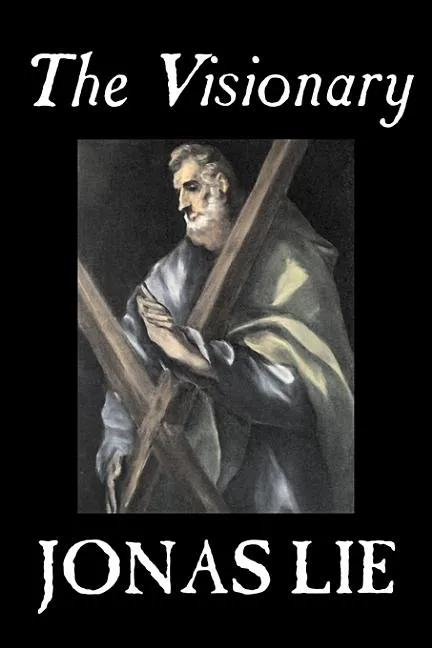
The Visionary by Jonas Lie, Fiction, Classics, Literary
Report an issue
Tell us what's wrong and we'll take a look.
Thanks – we got it. We'll review and follow up if needed.
A contemporary of both Ibsen and Bjornson, Lie first aspired to a seafaring life, but his eyesight made such a career impossible. He turned then to poetry and journalism, finally producing in 1870 this first novel, "a tragedy in which resistless Fate hurries its victims to destruction. The hero, David Holst, is one of those unhappy beings who seem doomed to a more than ordinary share of the ills of life. He has inherited from his mother at least a tendency to insanity and he lives in fear of being involved in a terrible catastrophe, from which he only saves himself by strong efforts of will and by the recollection of the lost love of his youth . . ."
I know many people who have felt the same inclination that sometimes comes over me, to choose bad weather to go out in. Men who have passed from a childhood lived in the open air of the country, to an occupation which entails much sitting still and for whom the room sometimes seems to become too narrow and confined-or else they are poets.
Jonas Lie
Jonas Lie (1833-1908) was a Norwegian novelist, considered one of the leading writers of Norwegian realism in the late 19th and early 20th centuries. He was born in Hokksund, Norway, and trained as a lawyer before turning to writing full-time Lie's works often explore themes of rural life, nature, and the human condition, set against the backdrop of Norway's landscapes. He was particularly known for his descriptive prose and ability to evoke the beauty and harshness of Norwegian nature. His novels often depict characters struggling with moral dilemmas, societal pressures, and personal growth, reflecting the influence of Scandinavian realism. Lie's writing had a profound influence on Norwegian literature, contributing to the development of a distinct national literary identity during the late 19th century. He was also recognized internationally, with translations of his works helping to introduce Norwegian literature to a broader audience. Some major works. "The Family at Gilje" (1883): This novel is considered one of Life's masterpieces, portraying the lives of the Baggesen family in rural Norway and exploring themes of love, duty, and social conventions. "Weird Tales" (1891): A collection of short stories that blend elements of realism with the supernatural, reflecting Lie's versatility as a writer. "The Pilot and His Wife" (1899): Another notable work that delves into the lives of fishermen and their families, highlighting Lie's keen observations of Norwegian coastal life.
More by Jonas Lie



Why Readwise Books?
Readwise Books is an ebook & audiobook platform that automatically logs how much you and your friends read, making it fun and easy to read more. Learn more →