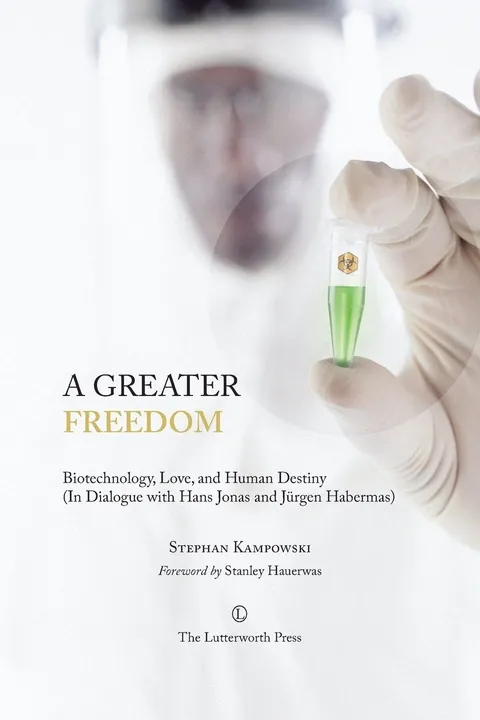
A Greater Freedom
Biotechnology, Love, and Human Destiny (In Dialogue with Hans Jonas and Jürgen Habermas)
Report an issue
Tell us what's wrong and we'll take a look.
Thanks – we got it. We'll review and follow up if needed.
How does biotechnology touch on human destiny? What are its promises and challenges? In search for a response, the present volume turns to the thought of Hans Jonas, one of the pioneers and founding fathers of bioethics. The continued relevance of his ideas is exemplified by the way Jurgen Habermas applies them to the current debate. The chief promise of biotechnology is to increase our freedom by overcoming the limits of the human condition. The main risk of biotechnology, as both Jonas and Habermas see it, is to diminish or outright abolish our capacity for responsibility and morality. It is argued that the greater freedom is not simply freedom from constraints but freedom for our destiny: the freedom to be the benevolent, responsible, and spontaneous authors of our lives, capable of communion and love. The touchstone for evaluating any biotechnological procedure has to be this greater freedom.
Stephan Kampowski
Stephan Kampowski is Associate Professor of Philosophical Anthropology at the Pontifical John Paul II Institute for Studies on Marriage and Family in Rome. He is the author of Arendt, Augustine, and the New Beginning: The Action Theory and Moral Thought of Hannah Arendt in the Light of Her Dissertation on St. Augustine (2008).
More by Stephan Kampowski


Why Readwise Books?
Readwise Books is an ebook & audiobook platform that automatically logs how much you and your friends read, making it fun and easy to read more. Learn more →