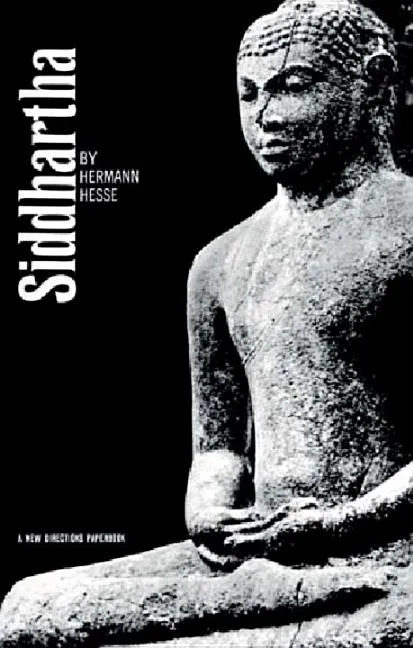
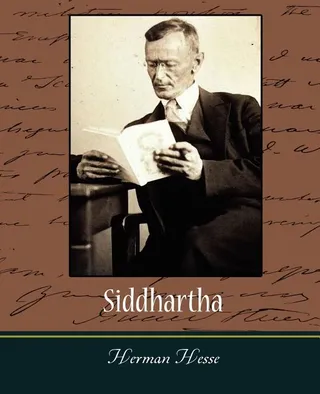
Siddhartha
Report an issue
Tell us what's wrong and we'll take a look.
Thanks – we got it. We'll review and follow up if needed.
Here the spirituality of the East and the West have met in a novel that enfigures deep human wisdom with a rich and colorful imagination.
Written in a prose of almost biblical simplicity and beauty, it is the story of a soul's long quest in search of he ultimate answer to the enigma of man's role on this earth. As a youth, the young Indian Siddhartha meets the Buddha but cannot be content with a disciple's role: he must work out his own destiny and solve his own doubt--a tortuous road that carries him through the sensuality of a love affair with the beautiful courtesan Kamala, the temptation of success and riches, the heartache of struggle with his own son, to final renunciation and self-knowledge.
The name "Siddhartha" is one often given to the Buddha himself--perhaps a clue to Hesse's aims in contrasting the traditional legendary figure with his own conception, as a European (Hesse was Swiss), of a spiritual explorer.
Hermann Hesse
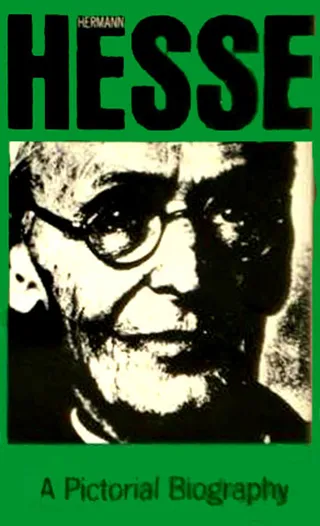
Hermann Hesse was born in Germany in 1877 and later became a citizen of Switzerland. As a Western man profoundly affected by the mysticism of Eastern thought, he wrote novels, stories, and essays bearing a vital spiritual force that has captured the imagination and loyalty of many generations of readers. His works include Steppenwolf, Narcissus and Goldmund, and The Glass Bead Game. He was awarded the Nobel Prize in Literature in 1946. Hermann Hesse died in 1962.
More by Hermann Hesse




Hilda Rosner
Translated by
Hilda Rosner is an author and translator.







Why Readwise Books?
Readwise Books is an ebook & audiobook platform that automatically logs how much you and your friends read, making it fun and easy to read more. Learn more →