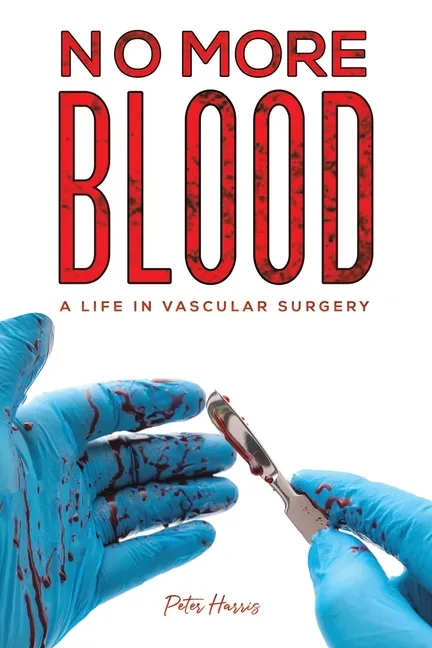
No More Blood
Report an issue
Tell us what's wrong and we'll take a look.
Thanks – we got it. We'll review and follow up if needed.
Blood is the life-force of every human being (and other animals). When it leaks out of our blood vessels, we die. When the aorta, the biggest blood vessel in the body, bursts, death usually comes quickly but for a lucky few it's not instantaneous. For them, survival is possible with emergency surgery. When a blockage in a blood vessel stops the blood from flowing, the deprived part of the body malfunctions and may decay if an operation to relieve the blockage is not performed. When Peter Harris first became a consultant vascular surgeon in the 1980s, the operations were big and bloody. When he finished in 2012, scalpels and saws had been largely superseded by bloodless needle-puncture procedures guided by X-ray images on a television screen. The evolution of the technology that made this possible is told primarily through the experiences of patients and includes vivid and, at times, harrowing descriptions of their operations and aftermath. Accounts of his own trials and tribulations and the good times are set against the troubled backdrop of the NHS starting in Broadgreen Hospital on the outskirts of Liverpool in 1979 and ending at University College Hospital in London in 2012.
Peter Harris
Peter Harris practiced law in South Africa for 15 years before being seconded to the National Peace Accord in the early 1990s. He headed the Monitoring Directorate of the Independent Electoral Commission for the 1994 election and is currently Executive Chairman of the Resolve Group Management Consultancy, which he co-founded.
More by Peter Harris


Why Readwise Books?
Readwise Books is an ebook & audiobook platform that automatically logs how much you and your friends read, making it fun and easy to read more. Learn more →