Report an issue
Tell us what's wrong and we'll take a look.
Thanks – we got it. We'll review and follow up if needed.
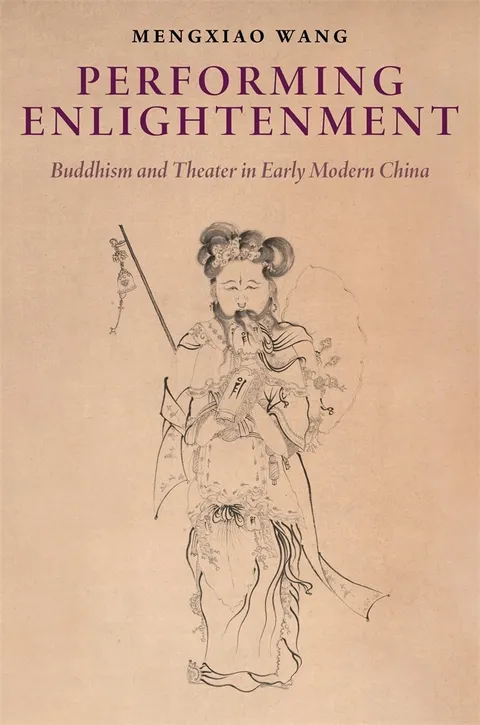
In early modern China, a major revival of Buddhism coincided with a surging fascination with theater. Buddhist monastics and laypeople increasingly participated in viewing, discussing, and writing plays. Far from merely serving as a medium for conveying religious teachings and practices, drama became a source of deep concern for Buddhists due to the perceived tension between spiritual discipline and worldly entertainment.
In Performing Enlightenment, Mengxiao Wang examines how Buddhist clerics and laity engaged with and drove innovations in theater during the late Ming and early Qing dynasties. Drawing on an extensive range of sources--including clerical sermons, scriptural commentaries, temple gazetteers, morality books, literati prose, and dramatic texts and paratexts--Wang argues that Ming-Qing Buddhists resolved the conflict between religion and entertainment by transforming theater into a creative mode of devotional practice. Consequently, playwriting, stage performance, and theatergoing all emerged as legitimate pathways to spiritual enlightenment. This interdisciplinary work provides fresh insights into Chinese studies, Buddhist studies, and theater studies while offering a comparative perspective on the complex interplay between religion, literature, and performance across cultures.
Mengxiao Wang
Mengxiao Wang is Assistant Professor of Chinese Literature at the University of Southern California.








Why Readwise Books?
Readwise Books is an ebook & audiobook platform that automatically logs how much you and your friends read, making it fun and easy to read more. Learn more →