Report an issue
Tell us what's wrong and we'll take a look.
Thanks – we got it. We'll review and follow up if needed.
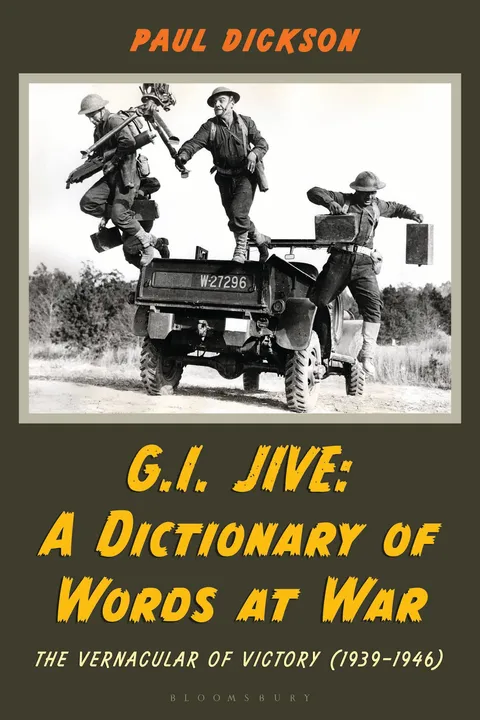
The language of American World War II military service began to evolve with the first draftees of 1940. Their emerging vocabulary was irreverent, creative, and often obscene, influenced by the worlds of music, jazz, swing, jive, and the nation's fascination with occupational slang. The massive Army maneuvers in Tennessee during the spring of 1941 gave rise to a host of profane acronyms, including SNAFU, FUBAR, SOL, and others. A vibrant new American war slang took shape, bolstered by the brash slang already in use by the British Royal Air Force. G.I. Jive: A Dictionary of Words at War: The Vernacular of Victory (1939–1946) explores that language, offering a fresh and multifaceted perspective on the war and the people who fought it. Definitions are richly detailed, incorporating word histories, quotations, and examples of early usage in print. Primary sources include news accounts, memoirs, diaries, letters, oral histories, and various slang and jargon compilations published during the war.
Paul Dickson
Paul Dickson is the author of more than sixty nonfiction books, including Sputnik: The Shock of the Century and The Bonus Army: An American Epic (with Thomas B. Allen), and books on electronic warfare and war slang. He concentrates on writing about the American language, baseball, and 20th century history. He lives in Garrett Park, Maryland.
More by Paul Dickson


Why Readwise Books?
Readwise Books is an ebook & audiobook platform that automatically logs how much you and your friends read, making it fun and easy to read more. Learn more →